a negotiation update from WMU-AAUP president, Dr. Cathryn Bailey
Dear Western Michigan University Colleagues,
Unfortunately, today’s long day of mediation, which had been prematurely initiated by the WMU Administration, has resulted in almost no change in their compensation position. As you may recall, the Administration proudly made an initial raise offer to WMU-AAUP faculty of 2.75/2.5 (first and second year) and then refused to budge during days of negotiations, despite the fact that the WMU-AAUP has compromised—our last offer was an 8/8.
The Administration’s current offer is 2.75/2.75. Yes, that’s correct, after weeks of grueling back and forth with our team, the Administration has come up by 1/4 of one percentage point. Their dogged determination to stand by their insulting offer—and, most likely, enlist the support of the mediator to validate it—is a reminder to us that we have more work to do to persuade them that we mean business. And, as a reminder, the deadline to come to a deal is this Friday.
With this in mind, I urge you to:
stop by Montague House to pick up fliers to distribute
meet up at Bronco Bash tomorrow in your WMU-AAUP t-shirt if you have one (initial meetup is in the lobby of Sangren Hall at 3:00; if you arrive later, we will be moving, so look for the WMU-AAUP t-shirts in the crowd to join up)
come to the Wednesday gathering at noon between the Student Center and Sangren Hall
subscribe to/check out the blog http://www.thewmuaaup.com daily to find more ways to get involved and to stay updated; follow the WMU-AAUP on Facebook
an urgent negotiation message from Cathryn Bailey, professor and president of the faculty union, the WMU-AAUP
Dear Western Michigan University Colleagues and Allies,
I’ve been a professor for over 30 years and I’m seeing things play out during these negotiations with the Administration that I could never have imagined.
First, some of the bad:
in what seems to be a historically unprecedented move, the Western Administration is effectively attacking the faculty in campus-wide emails even as it has failed to budge on its initial lowball compensation offer at the table; see here and here for WMU-AAUP responses, and please share them widely. Remember the Administration has the power to attempt to discredit and undermine employees at the push of a “send” button; we rely on YOU to help spread our message across campus and beyond
on Friday, in a tactic meant to pressure the faculty into accepting a low offer—and with a full week of negotiation time still remaining—the Administration’s anti-union corporate attorney made an official call for mediation, a usually conservative process that we (and the Administration) expect to favor management. The mediation is scheduled for today, but is not binding. If mediation does not lead to results consistent with the overall goals of the faculty, we will not accept it.
Next, some of the good:
there has been an outpouring of support from a whole range of WMU employee groups, across Michigan and, especially gratifyingly, from students and their families! The eyes of the nation are turning toward WMU, especially as the Administration seems determined to “beat” its own employees. While the Administration may be congratulating itself today on its capacity to stonewall and insult its own employees—and, yes, some of them visibly seem to enjoy doing this—the tide has already shifted. Further, as you may have noticed, the national appetite of working people to tolerate overpaid, anti-labor bureaucrats has waned considerably
working with state and national labor leaders, the WMU-AAUP is prepared to remain in this for the long haul and to continue to escalate action; We understand that, for many Western employees, falling wages is only a symptom of a larger campus crisis, one created and sustained by the weird financial priorities of career administrators, some for whom Western will merely be a line on their resume. These days, I can no longer walk about campus—or do my errands in town—without a colleague or ally who recognizes me urging “Strike!” When I say that I’ve never seen anything close to this level of outrage from employees, this is the sort of thing I’m talking about
the key to success is in members’ hands. There are concrete steps you can take starting right now to make sure this Administration finally listens to employees. As you’re deciding whether you’ve got 30 minutes or an hour to volunteer, consider this: As bad as things have been at Western, imagine what life would be like for students and employees if the WMU-AAUP were to be driven to its knees now? Indeed, it is precisely because we are a union powerhouse at Western that the Administration is so determined to beat us. They know that the way to further exploit other employee groups will be even clearer if they can make an “example” of the faculty now
What can you do?
stop by Montague House TODAY, grab some posters/fliers, and we’ll provide you with some especially strategic suggestions about what to do with them (the messaging and key locations will be changing daily, with surprise as a key strategic factor)
meet up for Bronco Bash tomorrow (in the Sangren Hall Lobby at 3:00). Our mobile group will distribute more fliers, and “tour” the Administration building
attend our special outdoor all-member gathering (also open to allies, students, community members, and the press) on Wednesday (August 28) at noon. There will be a real-time negotiation update, more fliers, and a live reading—we got a new bullhorn!— of President Montgomery’s latest appalling compensation agreement with our “impoverished” university; in addition, you can expect a musical rendition of “Cry Me a River,” a response to the Administration’s endless cries of institutional poverty
reach out to members of the Board of Trustees, and to local and state elected officials, and ask for their support in our efforts to persuade WMU to renew its commitment to its academic mission, to its employees, and to our students and their families (here’s an example of letter I sent to each Board member)
If you’re a member, contact staff@wmuaaup.net to self-nominate for the No-Confidence Working Group or for the new Strike Preparation Working Group. The latter will help study, and make recommendations regarding, strike logistics in case the Administration continues down its current path
Stand ready for more action as we will increasingly be relying on surprise as a strategic element. Also make sure you’re following us on Facebook and subscribed to our official blog: http://www.thewmuaaup.com
In solidarity with my WMU employee colleagues, and with our students and their families, all of whom deserve so much better.
Cathryn
PS: In addition to following the WMU-AAUP on Facebook, feel free to send me a friend request; I often repost WMU-AAUP items there, and it’s a fun place to enjoy some additional camaraderie during these hectic times.
A negotiation message from Western Michigan University Prof. Robert White (and former WMU-AAUP negotiation team member)
I wanted to share some thoughts regarding the negotiation environment we find ourselves in this year. I am not presently an officer, representative, or negotiating team member – but as someone who has been behind the scenes in previous negotiations, and who has also recently served in a partial administrative capacity for the Irving S. Gilmore School of Music, and an alum of WMU (Bachelor of Music Education, 1995), I’ve seen a lot at this point. And I have some perspectives on what we’re hearing from our Administration that might be worth taking some time to consider critically. Also, just like all of you, I am a Union member, and that means I’m an active – not passive – participant in the functions of this organization.
Our Negotiating team’s opening compensation proposal, did a marvelous job of justifying what they were asking for on our behalf. In addition to simply listening to the faculty, and the needs we expressed, they have used publicly available data to demonstrate that:
The University is in a strong position, financially, and has the resources to budget more money into paying faculty.
WMU has, for a significant amount of time, reduced its investment in faculty, all while increasing its investment in Administrative positions.
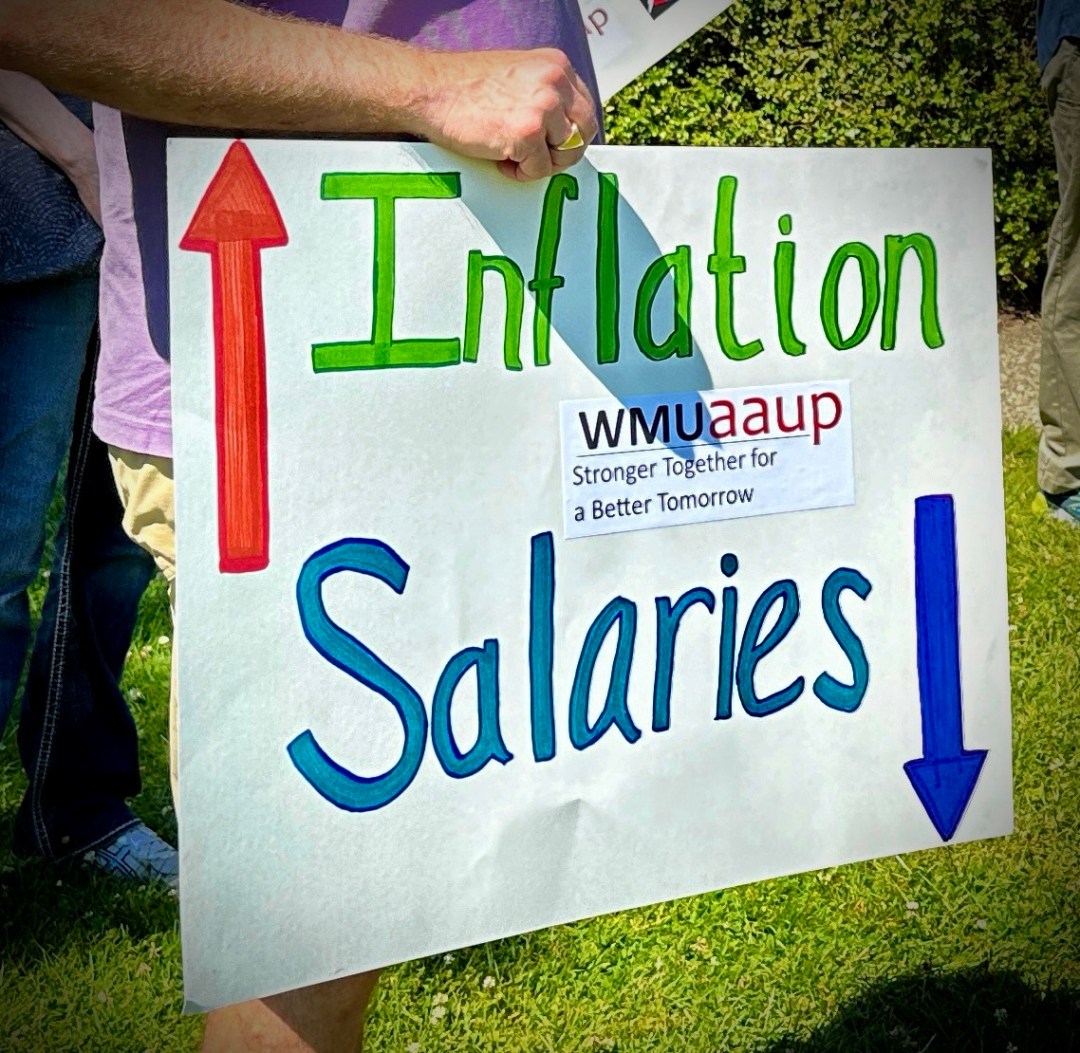
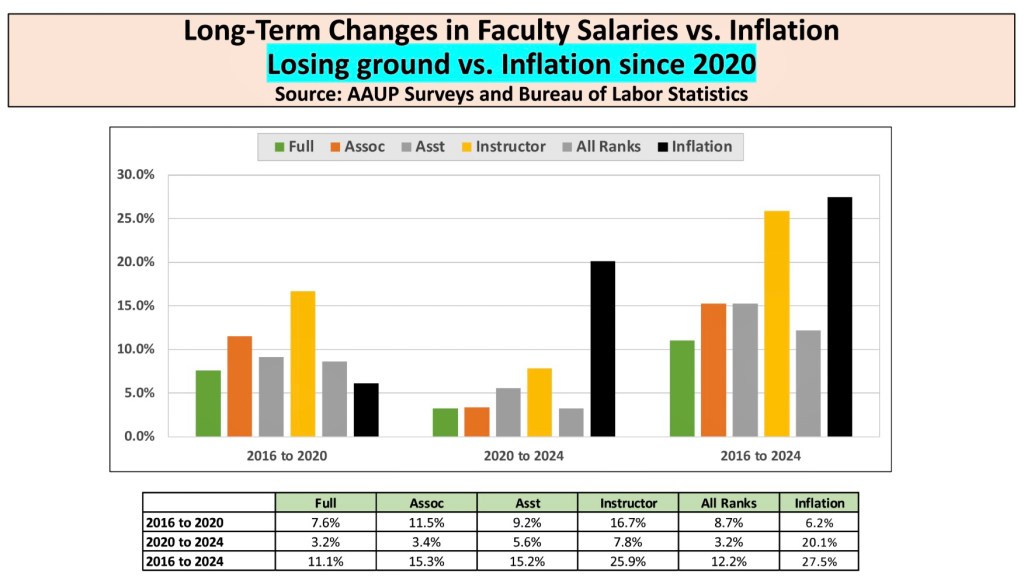
Faculty have lost significant ground to inflation, especially since our pay cut in 2020, and only incremental increases since then. (Look through the link above and/or the slides from Howard Bunsis’ presentation last Spring for the data).
This was a damn strong proposal, and one that I felt heartened to see presented. It was not simply grabbing an impossible number out of thin air, it was a balanced assessment of what WMU has the ability to pay for, and what we need in order to get back on the comparatively solid footing of our economic power in 2016.
In light of this understanding, I am deeply critical of the recent emails from our Administration (8/13 and 8/23), and its attempt to use its power to publicly address the entire WMU community with not only incorrect statements, but what seems like an attempt to frame the facts and context of this negotiation in a self-serving way (although, with a couple of delightful “self-owns” as well, which I’ll get to).
First, consider the assertion that compensation can only be paid for through revenue coming from tuition and state appropriation.This framing is used to make it sound as if WMU is already spending every cent that comes in on our expensive salaries and benefits packages. However, as the University’s own financial statements assert, there is enough money in reserves from these revenues right now at WMU to operate for about 9 months without any revenue at all. So, if the rapture occurred tomorrow and we found that only our students had the sufficiently immaculate souls to pass muster, the rest of us could still get paid our full salaries for the whole academic year before needing to find another job. This includes President Montgomery, Jan Van der Kley, their car allowances and club memberships… all of it. That’s incredibly solid footing, in fact, you might remember Howard Bunsis remarking last Spring that it’s about 3x greater than what’s considered “totally solid” in the public sector.
How much would our negotiation team’s first proposal have cut into that reserve? After all, it’s good to have a reserve right? Dave Ramsey and Suze Orman would be pretty proud to see WMU behaving so responsibly, so we obviously can’t propose a pay package that would exhaust that hard-earned 9 months of cash. And that $31 Million price tag sure sounds high – it must promise to devastate those reserves, right? Good news, it would only cut into it to the tune of a few weeks.
Think about that for a minute. For 7-8% of what it has accumulated, WMU could cover a contract that would suddenly reflect a long-overdue, serious investment in its faculty. I don’t know about you, but my feelings about working for this Administration would undergo quite a change if that took place. (Ok, maybe not that big of a change, but still!).
By the way, you’ll notice that, from the jump, Admin has lumped the entirety of what our team first proposed into not just one dollar amount, but a percentage. One that was then inflated some more to make it a big, scary “15%”. The word for this type of thing that people with PhDs’s use is “prevarication”.
That might be a moot point, since our team has already made some movement toward the middle, to proposed raises of 8.5 and 8.75%, according to the last email, (remembering that the Admin’s initial offer was raises of 2.75% and 2.5%). So our team’s current proposal would cut into even fewer of those reserves. The Admin’s response has been to move…brace yourself…+0.25% for 1 of the 2 years. Progress, I guess?
But rather than continue negotiating, the Admin now seeks mediation. They are throwing up their hands in frustration because…because we’re actually negotiating? Obviously they are leaning hard on Jim Greene and Dykema Gossett here – creating a narrative that our side is making an unreasonable demand and then refusing to negotiate against it in good faith, even though their absurdly low offer and unwillingness to budge is meant to stand on its own.
Infuriating, isn’t it? To lighten things up a little, I mentioned I’d point out a couple of “self-owns” from the Administrative team’s emails:
They admit to paying for yet another consulting report (two of them, actually) from Segal, as if that makes anyone think that some sort of objectively fair information has been gleaned. The degree to which they are willing to spend money on these things is something I feel like calling into Dave Ramsey’s show about, to be honest. They might have a problem.
They compare recent contract settlements from “peer institutions” (though certainly not the list that our Office of Institutional Research maintains…), which show significantly higher raises than anything they’ve offered so far. As someone on the “lower end of the pay scale”, that Northern Michigan deal looks like one I’d like to talk about! (Would have to be both years, though). Wayne State’s deal looks interesting, too.
Lastly, they assert, “The union negotiation team’s stated intention is to cover inflation dating back to 2016, but it should be noted that faculty have had negotiated wage increases every year since 2016. Over this same time period, WMU’s general fund budget has declined 25%, adjusted for inflation.” First of all, citing a budget decline is literally saying “We decided to spend less money. Therefore we can’t spend that much. Even though we’ve been bringing in tons.” Second, the assertion that we’ve received raises every year since 2016, besides being another “prevarication” (we do remember that pay cut, don’t we?), ignores the point that the proposed raises from our side is to make up what the meager raises of recent contracts hasn’t covered. A “raise” that is less than inflation is a pay cut – pure and simple.
In my previous career as an orchestral musician, I learned a lot about the labor history of that field. In Chicago, for example, before the world-famous Chicago Symphony fought to form the International Conference of Symphonic and Opera Musicians (ICSOM) in 1962, they would often show up for work in September to see a contract tacked to the bulletin board backstage, signed by the President of the Orchestra’s management, and the President of the Chicago Federation of Musicians. Those two parties would just make a deal, without the input of the actual musicians being represented. It seems as if that might be the type of union relationship our Administration is seeking. Indeed, with the way our COVID pay cut and subsequent agreements were arrived at (one of which I was on hand for), one could see how they may have kind of gotten used to just telling us what we were going to get, and us voting to approve it.
We don’t have to accept that, colleagues. If we uniformly express to our Admin that we are going to move forward this time, that we are going to get a contract that reflects our centrality to this University’s function, we can get it.
But that is only going to happen if everyone shows up. It’s not enough for our great team, active officers, and die-hard crew of supporters who always dependably put in the work, to do it for you. YOU have to show up.
See you soon,
Bob
Want to get involved? Here are some events planned for this week. Check back often as the situation is quickly evolving.
a letter to the Western Michigan University Board of Trustees from WMU-AAUP president, Dr. Cathryn Bailey
Dear WMU Trustee,
I’m reaching out again about salary/healthcare negotiations between the Western Administration and the faculty because I want to make sure you’re aware of how tense the situation is becoming. Not only my faculty colleagues, but employees from across campus, are urging the faculty union, the WMU-AAUP, to “stay strong,” and that is what we will do. Whether they are custodians, advisors, landscapers, teaching assistants, part-time instructors, or professors, many of my Western colleagues believe that WMU’s chronic trend of lowballing employees—with an insulting anti-union attorney now routinely speaking for them—symbolizes its ongoing disregard for, and disinvestment in, our university’s core mission.
It is because the faculty take our responsibility to students (and their families) so seriously that we plan to ramp up actions on campus in the coming days. My colleagues’ enthusiasm has been further stoked by a campus-wide message sent by the WMU Admin rationalizing another low compensation offer after years of precipitously falling wages. If you haven’t seen that message, I hope you’ll give it a look, especially since the Administration’s negotiation team is attributing its low salary offer to you. In short, the WMU-AAUP has been told that it is the WMU Board of Trustees—and President Montgomery— who refuse to consider robust raises for employees. The WMU negotiation team would like to do better by the faculty, they tell us, but, alas, the President and the BOT has instructed them to hold the line at 2.75%, a number that, given the context, faculty find insulting.
Whether it is actually true that the BOT has provided such instruction, I cannot say, but, regardless, I would ask you to consider the full context of the situation in which WMU employees have become increasingly frustrated and impatient. Much of our documentation and messaging can be found on our blog, and I am also available to talk with you if you think that would be helpful. To be clear, not only are WMU employees willing to show up strategically in the coming days—at what should be a time of unmitigated excitement and celebration on campus—but we will continue to do so, if, as seems to be the case, the Administration plans to stand by its low offer.
In closing, I want to be clear that all employees understand that Western has the power to insult and lowball employees. This is obvious as it has been happening for years. And we all get that, in some ways, the Administration is more powerful than employees and students. But in all of the ways that ultimately matter, of course, it is actually frontline employees, and students and their families, that hold the real power. And just as the mood of the country has shifted to one of hope and determination, so too has that of WMU employees. In short, we want to restore Western’s reputation as a great place to learn and to work, and we hope you will be our allies in that cause.
Respectfully, Cathryn
If you too would like to reach out to members of the Board of Trustees, they are listed here.
a negotiation message from WMU-AAUP president, Dr. Cathryn Bailey
I want to draw your attention to the negotiation message I posted earlier this week that included a summary of the WMU-AAUP Chapter compensation proposal and our holistic rationale for it. To recap: We have proposed robust, double-digit compensation increases after years of sacrifice that have threatened WMU’s ability to serve students, and brought a precipitous decline in our standard of living. As I shared our proposal with you, I predicted that the WMU Administration would cry poverty and, perhaps, try to paint WMU faculty members as greedy or selfish. And, sure enough, in a campus-wide email message sent later that same afternoon, the WMU Administration did exactly that. Offering faculty a paltry compensation increase of 2.75%, the Administration claimed that the Chapter proposal would effectively break WMU’s bank, and even harm students. We WMU employees are, if the Administration is to be believed, some combination of selfish and delusional in expecting to get our compensation levels up even to 2016 levels (which is effectively what’s in the WMU-AAUP proposal). I can also share that, at the table, the WMU Administration suggested that our proposal was insincere. Apparently, it is so inconceivable to them that employees might demand meaningful raises that they thought we might be joking.
In any case, I could so easily predict the Administration’s response to the Chapter proposal not because I’m psychic, but because this is the same song and dance they’ve performed ad nauseam, when employees—collectively, but often individually as well—have asked for more resources (including, for example, professional travel funds, staff support, student support, and on and on). Despite objective evidence that Western sits on impressive financial reserves—and has for years—the WMU Administration repeatedly trots out weak justifications for why, yet again, the university cannot afford to properly compensate or appropriately resource employees. Indeed, rather than investing consistently in its core mission, the Administration’s approach over the years has been to hoard, as if the goal were to maximize profit rather than responsibly run a diverse, equitable, inclusive and sustainable public university.
Maybe employees can expect more next year, the Administration suggests, maybe when enrollment is even better, or when State appropriations are even bigger, but not yet, never now. Such excuse-making functions as a form of gaslighting, as we watch these same administrators spend lavishly on so many things, including themselves. As we WMU employees grieve the loss—and absorb the work—of colleagues fleeing to other jobs or into early retirement, of course many of us have lost faith in the Administration’s will or ability to responsibly steward our university. Unless the WMU Administration assumes employees are dim or gullible, why do they keep insisting we rely on their word rather than the evidence before our own eyes, including that provided to us by reputable external financial and healthcare analysts? That some key WMU Administrators are the ones who are “out of touch” is confirmed by their indifference to chronic employee sacrifice since, as they have claimed at the table, elite administrators also have more work now than they used to.
Perhaps if WMU employees had not already endured relentless Administrative excuse-making and broken promises over the years—often based on shell games with the budget—we could be expected to be more trusting and patient. Evidently, such credulity is what President Montgomery and his negotiation team expect from us since in their Tuesday compensation message, they didn’t even bother to address substantive employee concerns. These familiar concerns include, for example, money spent on Administrative compensation, corporate consultants and law firms, and WMU’s apparently open-ended willingness to subsidize Division I football. Again, the Administration seems to be relying on us employees—many of whom are critical thinkers as a matter of professional competence—to deny the evidence before our eyes and, instead place our faith in them, despite the fact that they have repeatedly betrayed our hope and trust.
Just as it has for years, this Administration now seems determined to drown out substantive employee concerns by trying to razzle-dazzle us with selective, self-serving financial narratives. Often these are based on numbers and projections that neither we nor our external financial (or healthcare) analyst accept as accurate or plausible. (See below for a bit more detail.) In addition, of course, and as seems to have been the purpose of its Tuesday email, the Administration is eager to divide and pit employee groups against one another. “See how selfish and out of touch those professors are,” they suggest, as if the terms the WMU-AAUP negotiates only impact faculty. This is especially craven since the Administration knows full well that if the WMU-AAUP raises the compensation tide, then other employees’ boats are also more likely to rise. Not only that, in its negotiations with Western’s other unions, the Administration frequently points to WMU-AAUP compensation limits as a rationale for capping that of others. None of this is yet even to mention that the healthcare terms the WMU-AAUP negotiates impact nearly all WMU benefits-eligible employees.
What can you do?
share this message widely, keeping in mind that the Administration’s Tuesday email message was sent campus-wide, but the WMU-AAUP does not have access to that email list, nor does any other employee group; all employees are at a great disadvantage in this respect
reach out to the WMU-AAUP (staff@wmuaaaup.net) or to me directly to volunteer even 30 minutes of your time to distribute fliers or participate in other upcoming strategic actions (for example, one scheduled for late next week); stand ready for additional, spontaneous action calls
as you are able, share your concerns with the Administration and with members of the Board of Trustees
wear your WMU-AAUP t-shirt, display our fliers and posters, and show your support on social media
The WMU-AAUP stands in solidarity with all WMU employees and their families, and also in respectful service to our students—none of whom deserve to start their college experience at a campus in turmoil. With this in mind, I urge the WMU Administration to do better and to do it now. Our students and their families are counting on us.
Cathryn
Dr. Cathryn Bailey, President of the WMU-AAUP
A few notes:
The Administration’s projections on cost are very high, for example, using a near 50% rate to calculate fringe. Not only do we not know the actual fringe costs because the Administration does not share them with us, only 19% of fringe is dependent on increased rates of inflation. Again, keep in mind that the Administration has long been forcing WMU employees to negotiate healthcare in the dark because they refuse to provide critical information, leaving us to assume that they may be raking in huge profits in this area.
According to WMU’s own calculation, the WMU-AAUP compensation would cost the university only 3 weeks of reserves (i.e. its hoarded profits). According to our own calculation it is two weeks. And while, according to the Administration’s wildly conservative claims, nine months of reserves are needed, and our financial analyst cites three months as the responsible amount, and the Administration’s own professional organization cites only six, you’ll see that our proposal would barely impact even their most conservative number. To put this in perspective, in essence, the proposed WMU-AAUP compensation package would only come to about half of what athletics gets.
We also note here that WMU employees have long been describing increasingly intolerable quality of life frictions to the Chapter. For instance: going into debt or dipping into critical savings to pay day-to-day bills; struggling to pay medical bills; dealing with rising daycare costs; grocery prices that strain budgets; interest rates and housing prices—that, in combination with falling wages—place home ownership far out of reach; leisure time and vacations that now seem impossible, even as burnout makes them more necessary; the looming threat of an expensive house or car repair creating chronic anxiety; retirement further out of reach. As the Administration hoards “rainy day money”—as it did even during the worst of the pandemic—it is raining hard for many in the Western family. After all, how many WMU employees are sitting on nine and half months of “reserves?”
A negotiation update from WMU-AAUP president, Dr. Cathryn Bailey
Later this morning, the WMU-AAUP negotiation team will present our proposal regarding faculty compensation to the WMU Administration. As our team presents our collective demand for a fair compensation package—including meaningful raises that will actually make a difference to you and your family—I want to make sure you are clear about some of its key aims, especially since you will need to participate to achieve them. As you consider the numbers below, you’ll see that this proposal takes seriously the devastation to employee purchasing power resulting from sharp cost of living increases. Indeed, and as is consistent with input from members, we believe it is our responsibility to advocate for robust raises. This point is underscored by the objective fact of WMU’s consistently vigorous financial health—despite its ongoing cries of poverty—and the years of financial sacrifices employees have been expected to absorb. At the same time, the Administration has spent money with abandon on corporate consultants, Division I football, union-busting attorneys, and, of course, its own jawdropping salaries and bonuses.
The proposal’s key elements:
Raises of 11.25% across-the-board in both 2024 and 2025, reflecting the decline in salary relative to the Consumer Price Index for Urban Consumers (CPI-U) since 2015, and a further projected CPI-U increase of 2.4% per year. While these numbers are visibly larger than those of our past collective bargaining agreements with Western—and you can be confident the Administration will accuse the faculty of being greedy—this 22.5% raise would still onlyreturn our purchasing power in 2026 to its 2015 levels.
“Research supplements” of 3% in 2024 and 2025, to be based on the median salary within each rank. These additional increases reflect some acknowledgements of faculty contributions to Western’s core mission.
An increase of $9000 to salary minima at each rank, thereby significantly raising the bar for the lowest paid faculty members.
An increase of $75 per credit hour to overload rates.
A promotion/step increase of $1000 for Full Professor and Master Faculty Specialist, and $850 for Associate and Assistant Professors.
A $1000 increase to each of the faculty recognition awards (teaching, research, and service)
The WMU Administration’s ongoing demands for “belt-tightening,” rationing, and other expressions of manufactured austerity, are especially hollow given their own exorbitant compensation and their apparently endless willingness to subsidize Division I football. (Note that this Administration actually expresses at the negotiation table its implicit expectation that WMU employees agree to the ongoing prioritization of football over academics.) We are, then, especially proud to propose compensation increases for faculty that represent a meaningful increase after years of being starved of resources and compensation.
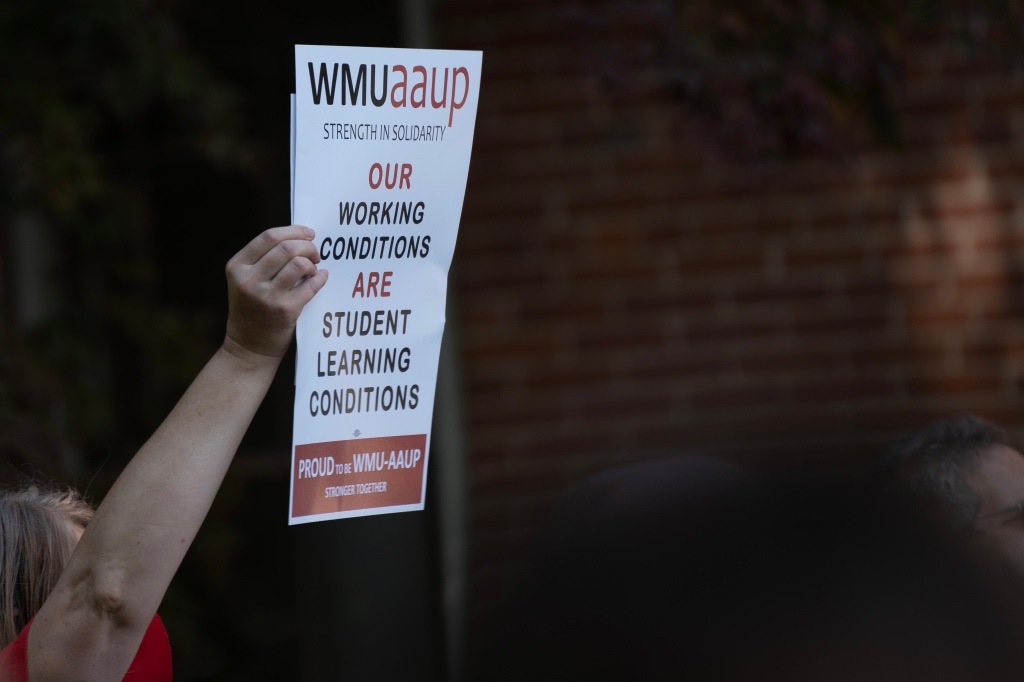
Indeed, it is disappointing that, at a diverse public university, one built on the backs of working-class students and their families, the Administration would remain unwilling to properly compensate the workers who actually make the institution function. And this has been despite our continued reminders that “our working conditions are student learning conditions.” When the Administration lowballs and starves the faculty, when it treats us like a liability to be whittled away rather than a resource to be nourished, it is Western Michigan University students who ultimately suffer most. We faculty should keep in mind too that the salary increases we negotiate for ourselves have historically been used to benchmark those provided to other key employee groups. When the Administration successfully lowballs the WMU-AAUP, they tend to use this as an additional rationalization to undercut other employees as well.
As negotiations proceed, then, expect this Administration—some of whom have become millionaires for serving as figureheads, managers, and bureaucrats—to shame frontline workers who are advocating for better pay for themselves and their families. The degree to which this WMU leadership has grown out of touch can, I think, be tracked in part, by its now compulsive inclination to hack away at our university’s core academic mission and functions, as if teaching and learning were somehow incidental to why our students and their families choose Western. And that President Montgomery and Provost Vasquez Heilig have, yet again, empowered a notoriously aggressive, union-busting law firm to speak for them at the negotiation table speaks volumes. This is, by the way, the same corporate law firm now aggressively arguing the Administration’s case that it has no obligation to fund your professional research travel, further eroding your income and ability to succeed in your career and serve students.
Again, keep in mind that Western has the funds to properly compensate employees. Indeed, WMU currently has triple the amount of financial reserves that academic financial analyst Howard Bunsis regards as ‘solid.’ Further, since 2019, WMU has posted impressive positive cash flows of between 8.8 and 11.7%. To be clear, this includes some of the worst years of the pandemic, the very same time the Administration fired many employees. The Administration then demanded that remaining employees take on additional work (and even donate part of our salaries), a situation that has never been rectified. Again, WMU’s cash flows represent profit for the institution, money that Western could, instead, easily choose to reinvest in the people that fulfill the core mission.
Although the WMU-AAUP negotiation team will fight for our proposal at the table, it is only through your participation in strategic collective actions that we will win them. In short, if you are expecting a meaningful compensation increase—and to maintain your healthcare as is—then, you need to do your part by standing ready for targeted, escalated action. If you’re reluctant to step up now, please consider the stakes: How much longer can Western afford to be bled dry by the weird priorities of career administrators who always find some new reason for starving the core academic mission? Not only is this Administration compromising faculty and students, it is stealing from WMU’s future.
As most of us know all too well, dizzyingly high administrative salaries and VIP perks aren’t only a feature of elite universities, but have become a fact of life at relatively affordable regional universities like Western Michigan University. With the WMU-AAUP in the thick of negotiations over faculty salary and benefits, and after years of sacrifices by WMU employees, this is surely a good time to look at what WMU thinks is a reasonable compensation to offer administrators. Will these well-heeled administrators continue to accuse employees demanding meaningful raises of being greedy or out of touch?
According to documents the WMU-AAUP obtained from WMU by FOIA:
the President, Edward Montgomery, in addition to receiving over $500,000 base annual salary, also has housing (and house maintenance and housekeeping) and car paid for, as well as club memberships, e.g., The Park Club and the Kalamazoo Country club. He is provided an additional $50,000 per fiscal year as an “executive retirement benefit,” and up to $10,000 per year reimbursement “to purchase life insurance to cover the costs of health insurance coverage for his spouse in the event of the President’s death.” Despite an overwhelming Vote of No-Confidence in him by the faculty, his salary and bonuses have only increased.
the Vice President of Marketing, Tony Proudfoot, with a $252,000 salary, was offered a $12,000 “bonus” simply for signing his contract and also received a “performance bonus” of $13,000 authorized by President Montgomery. In addition, he receives a $625 monthly automobile allowance, club memberships, and was offered up to $10,000 for moving expenses.
the Vice President for Research and Innovation, Remzi Seker, receives a salary of $278,000, club memberships and up to $10,000 for moving expenses.
the Provost, Julian Vasquez Heilig, who earns $350,000 annually, receives a $625 monthly automobile allowance, club memberships, and received a $25,000 “bonus” simply for signing his contract. In addition, he was offered the value of up to one month of his salary for moving expenses.
In decades past, university administrators were usually individuals with long service as faculty members who often remained rooted in, and primarily motivated by, academic values and concerns. These days, presidents, provosts, deans, and the like often have relatively little experience with students or research, or with the critical dynamics of shared governance. Instead, such individuals are often hired for their willingness and potential to “manage” people, as well as campus and public opinion. Whatever their backgrounds and motivations, many are extravagantly compensated even as they routinely lecture the rest of us about the need to “tighten your belts” and “do more with less.”
Many faculty members, staff employees, and students are queasy about the rock-star salaries of elite administrators, especially at institutions like Western that owe much of their success to first-generation, working class students. That our university continues to enrich elite administrators while simultaneously telling WMU employees that WE’RE too expensive — frequently suggesting we’re lazy or greedy— is basic gaslighting. Western Michigan University has made the value it places on administrators crystal clear. Just so, the employee compensation it agrees to at the negotiation table will be the clearest expression of what WMU thinks the rest of us are worth too, that is, the value of the employees who actually carry out the university’s core mission.
To show your support for fair pay, and the dignity and worth of the WMU employees who make WMU possible, pick up and display your WMU-AAUP signs, wear your WMU-AAUP t-shirt, and stand ready for action. Let’s fight for our university, our students, our negotiation process, and one another!
a negotiation message from Dr. Cathryn Bailey, President of the WMU-AAUP Chapter, the labor union for Western Michigan University’s Board-appointed faculty
It is my unfortunate duty as President of the WMU-AAUP to share with you today that the news both from the 2024 negotiation table and from our member-activists in the field is concerning. First of all, Western’s management—a handful of university administrators (led, once again, by an exorbitantly paid attorney from a union-busting Detroit firm) is refusing to provide data necessary for us to advocate effectively for our members. Indeed, week after week, the WMU-AAUP team, guided for the first time ever by a labor-centered external healthcare consultant, has faced stonewalling as the WMU Administration throws up its hands, claiming that it is unable to provide information about how much it spends on healthcare each year. In addition, WMU-AAUP members and allies are reporting that union-pride and other negotiation-related posters are being torn down by the University almost as quickly as they are posted. In general, the message that our employer is sending to campus employees—and keep in mind that the salary portion of negotiations has yet to begin—is one of obstruction and obfuscation.
More specifically with respect to healthcare, the WMU-AAUP negotiation team has repeatedly requested data regarding rate development and the reconciliation reports of employee health care costs. This is critical to achieve even a modicum of transparency about how the annual rates for health care are being projected, and also to assess the balance between employee insurance claims and contributions made by the university. As our team has pressed for this data week after week, the Administration has resisted. Shockingly, the Administration is now claiming that they, themselves, do not access such reports from external consultants and vendors, data that we are confident is available to them. Whether the Administration’s response here is straightforward stonewalling or based on a stunningly irresponsible lack of curiosity on their part, it obviously puts WMU employees at a huge disadvantage. Without such data on the table for all to see, WMU can—as it has apparently done in at least some past negotiations—make assertions about its healthcare costs that are wildly exaggerated. And the fact that these Administrators are not embarrassed to openly assert to us that they do not themselves even bother to request such basic, vital information is noteworthy given the constant administrative rhetoric about scarce resources and fiduciary responsibility.
To provide a bit more context for all of this, please note again that, as I write this, negotiations regarding salary increases—usually the most contentious part of labor negotiations—have not even begun. But please keep in mind that the WMU Administration has historically insisted on tying compensation to healthcare benefits during negotiations, effectively claiming that any salary raises will have to be balanced by employee concessions on healthcare. It’s similar to a common tactic used at car dealerships when the trade-in value, new car cost, and financing charges get rolled together in a way meant to confuse the buyer and grossly advantage the dealership. You can be sure, then, that the WMU Administration has gotten in the habit of mashing together these two distinct matters—compensation and healthcare—precisely because it has been beneficial for them to do so. This also helps shed light on why the Administration has been so adamant that employees be kept in the dark about the actual costs of healthcare. What would employees accept as fair compensation and healthcare if we knew how much our benefits are actually costing the university? Given how reluctant the Administration is to provide this information, one is left to imagine they must be raking in huge profits in this area and perhaps have been for decades.
In closing, I’ll return to the concern about negotiation-related, union-pride posters being torn down by the Administration, an act that I construe as part of the Administration’s overall campaign to demoralize and intimidate employees. This Administration, while claiming to be employee-centered and union friendly, evidently does not welcome the visible signs of employee solidarity or robust critique that are a normal part of nearly all negotiation cycles. Although it is disappointing that Western Michigan University has become increasingly inured to, and intolerant of, employee input and dissent (and increasingly dismissive of its negotiated labor contracts), the good news for employees is that this Administration is nervous about the power of worker solidarity. To be sure, employers who are genuinely committed to treating employees fairly and respectfully do not rely on intimidation tactics, gaslighting, or stonewalling. Indeed, one reason some universities become known as “a great place to work” is precisely by how their management handles negotiations —and other dealings—with their labor unions.
What can you do? In addition to all the instructions you’ve already received from the WMU-AAUP about supporting negotiations:
⁃ share this message widely, with both your faculty colleagues and allies
⁃ contact the WMU-AAUP to arrange to pick up posters and other materials or to have them delivered to you; the fact that the Administration is tearing down posters proves that they are meaningful, so it should surprise no one that we intend to increase our efforts in this area
⁃ to whatever degree you feel able, connect with union-friendly WMU colleagues, including administrators, making sure they understand how the WMU negotiation team—a handful of temporarily-empowered individuals—is treating employees at the table
Remarks delivered by the WMU-AAUP team at the June 13 opening of salary and healthcare benefits negotiations with Western Michigan University
Good morning. The reopener to the 2021-26 Agreement for economic compensation and health care benefits and insurance arrives at a critical time for the membership of the WMU-AAUP. As the negotiation team has researched and prepared for collective bargaining, we have met with faculty over numerous listening sessions and surveyed the membership directly. The direction we received from the faculty is clear: there is a need to ameliorate the rising costs of living, to acknowledge the contributions and sacrifices faculty have made, and a demand for comprehensive, affordable health care for members and their families. The time is now to make an investment in faculty to ensure we have access to a comfortable standard of living and a secure future, an affirmation of the indispensable role of faculty, as scholars and educators, in making WMU a distinctive institution.
The negotiation team looks forward to engaging in productive discussions with the administration to address these challenges that impact the day-to-day experiences of our membership. We believe a mutually beneficial agreement on compensation and health care is possible. After all, the well-being of our membership enhances the institutional and educational goals of WMU. In this opening statement we would like to spend a few minutes outlining the concerns and priorities of our membership, but first I would like to pause and introduce the members of the WMU-AAUP’s negotiation team: Dr. Regina Garza Mitchell, Dr. Jean Kimmel, and myself, Dr. Andrew Hennlich, chief negotiator. We are also joined by Erin Dornbos, WMU-AAUP attorney and Lori Maguire WMU-AAUP Operations Manager.
Economics
Simply stated, our membership needs real raises. Ones that respond to the years of declining value as the cost of living has increased. As the recent AAUP Faculty Compensation Survey shows, faculty at WMU have experienced a significant decline in earnings when adjusting for the Consumer Price Index for Urban Consumers (CPI-U), the US Department of Labor’s statistic for measuring changes in the cost of living. From 2015 to December of 2023, the WMU faculty have experienced significant declines in their earnings across all ranks, including:
● 17.6% for full professors
● 15% for associate professors
● 15.5% for assistant professors
● 8.8% for instructors
As we met with our members we have heard stories of the very real impact of those statistics. During a chapter-wide listening session, one faculty member described the material realities many of us face:
“Prices are going up in Kalamazoo, housing prices, etc. Property taxes. We have no control over these things, but we also have no savings or reliable increase in salary in order to maintain a basic living standard. . . . I am on worse than a fixed income. . . I am not only falling behind, I am falling into debt. . . . I want a quality of life and a salary where I can keep up with the changes that come at us from property taxes, water, tuition for kids in college, etc. . . .To be compensated in a way that is fair and equitable.”
This faculty member is not alone in feeling these pressures and the urgency of fair and equitable compensation. When surveying faculty we also heard another describe the heartbreaking decision of having to choose between healthcare coverage and groceries. We need to work together to find solutions to these challenges for faculty to feel security in their material conditions of living, and as members of the WMU community.
Keeping pace with inflation is not enough. The WMU-AAUP will call for additional adjustments to salary in acknowledgment of the diverse, unique talents of the board-appointed faculty. Salary increases must also acknowledge the faculty’s creative energies, research acumen, and the passion and insight we bring to the classroom; contributions that are, fundamentally, what makes Western, Western. Despite declines in the overall number of faculty, President Montgomery lauded the externally funded research expenditures [that] saw a 24% increase over the previous fiscal year, totaling $35.3 million, which is a high in at least the past 21 years. Total awards, meanwhile, reached $41.9 million, an 18% increase over the previous fiscal year’ during his 2023-4 State of the University address.
These accomplishments directly contribute to the financial health of the institution, as President Montgomery notes, but it is important to acknowledge how the faculty enhance WMU in a multitude of ways beyond economic value: books and journal articles, performances, concerts and exhibitions, consultancy and public service, teaching and mentorship are a few of the myriad ways faculty contribute to Western. We deserve to be acknowledged for this work, and for the sacrifices we have made since COVID including confronting physical and mental health challenges for students and faculty alike, shifting to multiple instructional modes, student preparation, and significant decreases in administrative support for faculty work.
Salary adjustments must address both the cost of living and our performance as employees. Accordingly, we need to increase salary minima to address the acute impact the cost of living has on faculty who are on the lower end of salary at rank, and to enhance promotion increments in acknowledgement of the excellence these accomplishments represent. A robust, fair, and just compensation package for the WMU-AAUP is an investment in the institution’s well-being and its future, ensuring excellence in scholarship and in the classroom.
Administrative Finances
One of our tasks as a negotiation team has been to review the financial picture of WMU. It remains clear, from comments made by senior administrators at WMU, through a budget analysis by Dr. Howard Bunsis on behalf of the WMU-AAUP, and our analyses of WMU’s financial records that the fiscal outlook for Western is positive. Simply stated, the administration has the means to invest in faculty. Let’s take a closer look at the numbers:
Overall, the institution continues to report positive excess cash flows in each year since 2014, WMU takes in more money than they spend. In other words, it turns a profit. Revenues have increased nearly $46 million since the COVID low point in 2021. Reserves have grown in excess of $381 million. And state appropriations are healthy (at a recommended 2.5% increase for 2024-25, which follows a 4.9% increase received for 2023-24 ). The WMU 2023 Audit Statement declared that the University was in a strong financial position, a sentiment echoed by President Montgomery in his State of the University Address. He noted that we are in the third year without a budget cut, and $3.5 million was returned to the colleges for their discretionary use. In addition, Empowering Futures is helping WMU grow by providing services and scholarships for students, which should make it easier to pay faculty what they are worth, something our President stated as a goal: “it’s estimated that by 2027-28, that midpoint, WMU would have an additional $32 million more in revenue. These additional resources will allow us to invest in our faculty and staff and to further our mission as a student-centered public research University.”
Despite enrollment challenges felt across the nation, WMU continues to grow. New student enrollment was up this year by 2%, including a 7.2% increase in graduate students and 1.1% increase in new undergraduate students. It is also worth noting that our first-to-second-year retention rate was 79.8%, and graduation rates have also increased. Faculty played a tremendous role in those changes. And yet, we note that Western has failed to make that investment in faculty. From 2016 to 2022 the salary for ‘Institutional Support’—IPEDS’ term for ‘for general administrative services, central executive-level activities concerned with management and long range planning, legal and fiscal operations, space management, employee personnel and records, logistical services such as purchasing and printing, and public relations and development’—increased by $1.1 million, while salary for instruction declined about $8.6 million. Though institutional support has declined marginally from 2019-23, it is nothing compared to the decline in spending for instruction. These data raise an important question: What are the administration’s priorities? Is it instruction and research or an ever-growing administrative class? Again, we emphasize that Western has the means to support faculty, the question is its willingness to do so.
Health Care
During our meetings faculty have naturally brought up concerns about their health care and insurance benefits. They remain anxious about rising costs of their health care contributions. The faculty and administration are motivated by the same concerns: a need to keep costs low, whilst ensuring quality coverage. Afterall, we are on the same health plan. In that spirit, we would like to remind the administration that it is necessary we have access to relevant health care data, and would like to ask the administration’s team when such information will be available for the WMU-AAUP negotiation team and its health care analyst. In addition to concerns about cost, we have also heard faculty describe challenges within the plan structure, and we intend to work on addressing them during collective bargaining. In every listening session we’ve held, faculty have brought up the need for changes in vision care: annual checkups and adjustments to vision plan coverage of eyewear that reflects the reality of current costs and standards for optical care. Faculty have also expressed frustration over the challenges of the current prescription drug plan, particularly for members who have tier four and five drugs. Likewise, there are concerns about dental costs and network coverage, and so we will ask for a request for bids for dental network providers, so that we can make an informed, collaborative decision about the best possible coverage. As we begin to examine costs, use and spending data for the HMO and PPO plans, the team anticipates further discussions about plan structure and costs.
Conclusion
Again, the team looks forward to constructive dialogue with the administration to address the challenges the faculty face in their day-to-day lives, as we hope you remember the fundamental importance of our membership’s contributions to WMU as a quality educational institution. Now is the time to invest in faculty to ensure that future. Today, during our first bargaining session, the team has a few goals in mind. One, we would like to agree to ground rules for future bargaining sessions. The team has reviewed the rules from the 2021 negotiations and found those rules amenable; we have circulated those for review. Secondly, we would like to set up an agenda for future negotiation sessions.
The team has a preference for beginning with Article 33, Health Care and Benefits. And finally, we want to set up a schedule for future negotiation sessions. Our side proposes two sessions per week, to meet on Tuesday mornings from 9-12 and on Thursday afternoons from 2-5. We would also like to discuss a long-range calendar for negotiations, as there are periods where our team members will be unavailable to meet. We look forward to working with you in the coming months to find solutions to these significant challenges to the faculty, and to reaffirm WMU’s stated intention to invest in its faculty as the core of the institution’s mission. Thank you.
a message from WMU-AAUP President, Dr. Cathryn Bailey, and WMU-AAUP Vice President, Dr. Whitney DeCamp
We’re reaching out with time-sensitive information regarding the WMU-AAUP’s efforts to enforce the contract regarding funding for research travel. If you simply wish to learn more about what you can do to help restore travel funding, skip to the last section of this email. Otherwise, please review this full message to ensure that you’re fully up-to-date.
The backstory
As you may recall, in September of last year, we warned of draconian cuts by the WMU Administration that would result in absurdly low funding amounts, a shocking $133 per faculty member for the entire year. Although the Administration quickly rolled back part of this plan after a strong faculty reaction, it has continued to dispute faculty members’ contractual right to receive funding for two trips.
The Chapter’s position has always been that the contractual language regarding this matter is clear and unambiguous. Indeed, the most relevant sentence (in Article 34) states: “Faculty may receive travel support for up to two (2) professionally recognized meetings per year through the FRTF.” Nonetheless, the Administration denied the Chapter’s grievance filed in September regarding this matter, based, in part, on its (implausible) reasoning that “up to two” might be interpreted as just one (or even zero). When the Administration was unwilling to agree to follow the plain language of the contract, the Chapter submitted a demand for arbitration. This process includes review by a qualified third-party and would impose a legally binding solution on both parties.
While nearly everything about this process has been disappointing from our point of view—not the least the Administration’s dogged attempt to nickel and dime faculty who wish to fulfill their professional research obligations—we were further disillusioned by the university’s latest attempt to drag its feet. So, although the arbitration hearing was originally scheduled to take place this week, the Administration requested earlier this month that it be postponed. Although the Chapter objected to the delay, the delay was ultimately granted (and was accompanied by a steep rescheduling fee for the Administration). The summary, then, is that the Administration is continuing to drag its feet, creating ongoing hardship for faculty who need to plan and carry out professional travel.
What you can do
Reach Out to Faculty Senate Representatives: Even as the Chapter is following common-sense legal advice and eager to resolve this matter through arbitration, there is a memorandum of action (MOA-24/02) regarding this issue that is being proposed to be presented for a vote by the Faculty Senate at its meeting this Thursday. This MOA (among other concerns) contradicts our negotiated contract, which guarantees faculty the right to use the FRTF up to two times per year. There is nothing in the contract that makes the guarantee conditional on funding allocations set by the Administration, nor has that ever been the practice used in administering the FRTF. Although this MOA could not take effect without the signature of Chapter president—who has already indicated she will not approve it —we believe that it is unproductive for this MOA to even be considered at this time. Again, the WMU-AAUP is in the midst of legally-binding proceedings with the Administration to resolve this matter and so it would be untimely, at best, for a faculty body to vote on this MOA. With this in mind, we encourage you to reach out to your Faculty Senate representative to ensure that they are aware of all the facts regarding this matter. Encourage them to vote to table this MOA, if possible, until after the arbitration is resolved, or to vote no if necessary.
Preserve Documentation Regarding FRTF-Related Matters: We confirmed through the recent survey we conducted that many faculty have experienced a financial our-of-pocket impact of the changes to the FRTF amount and trip maximum. Even more have reported professional impacts that have caused them to change current or future travel plans as a result of the Administration’s unilateral changes to FRTF travel reimbursement. We are asking all faculty to preserve any documentation they might have about impacts, whether financial or professional (or both). This might mean documentation of expenses for non-reimbursed travel, evidence that other funding sources were unnecessarily drawn down to cover funding gaps, or even communications showing changes to research or travels plans (short-term or long-term). Please preserve these records, as they may be relevant if the arbitrator allows for compensation. The Chapter filed the grievance about this issue within days of the announcement, yet we will have waited nearly an entire academic year for a resolution as a result of the slowdowns forced on the process by the Administration.
As a faculty, we have many battles to fight to reverse the Administration’s shameful determination to decimate Western’s integrity as a research-intensive university. This contractual dispute is one such battle.

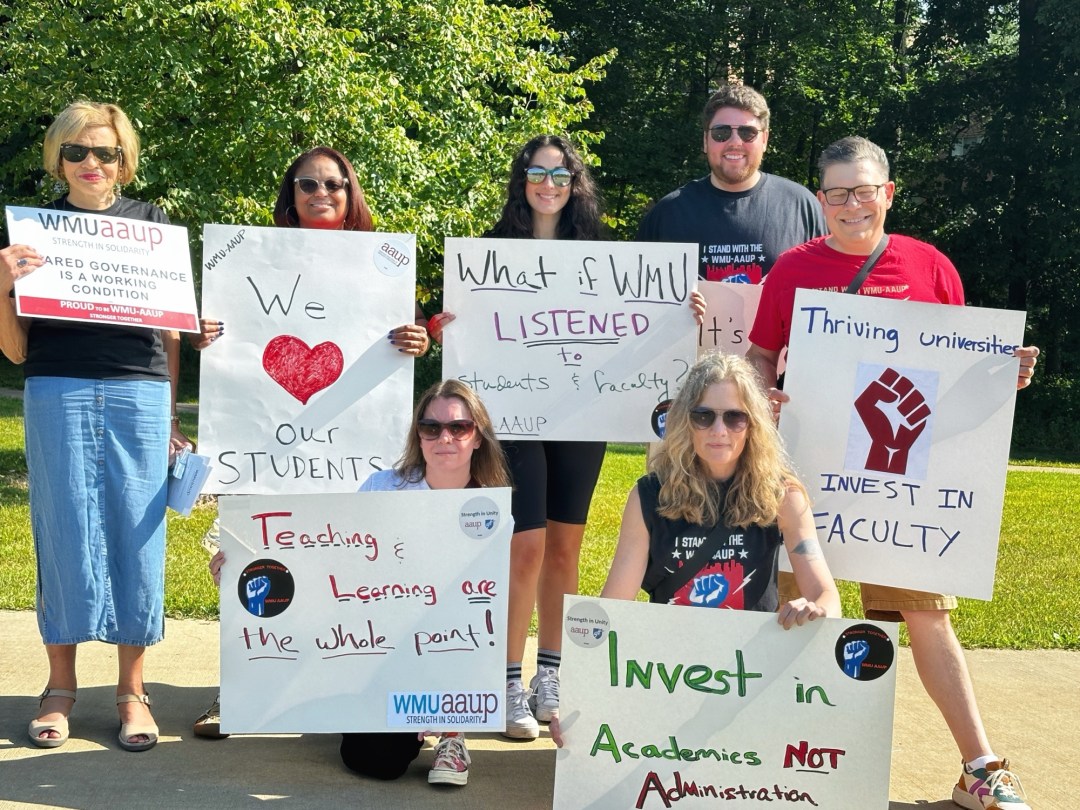
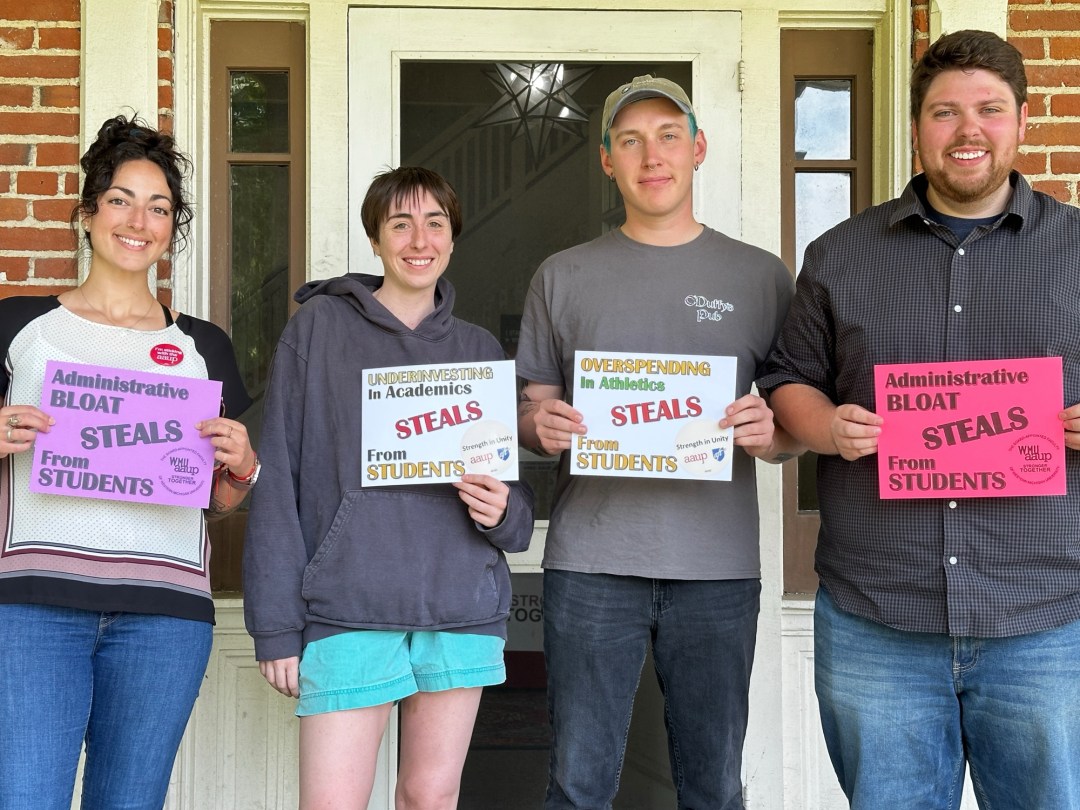
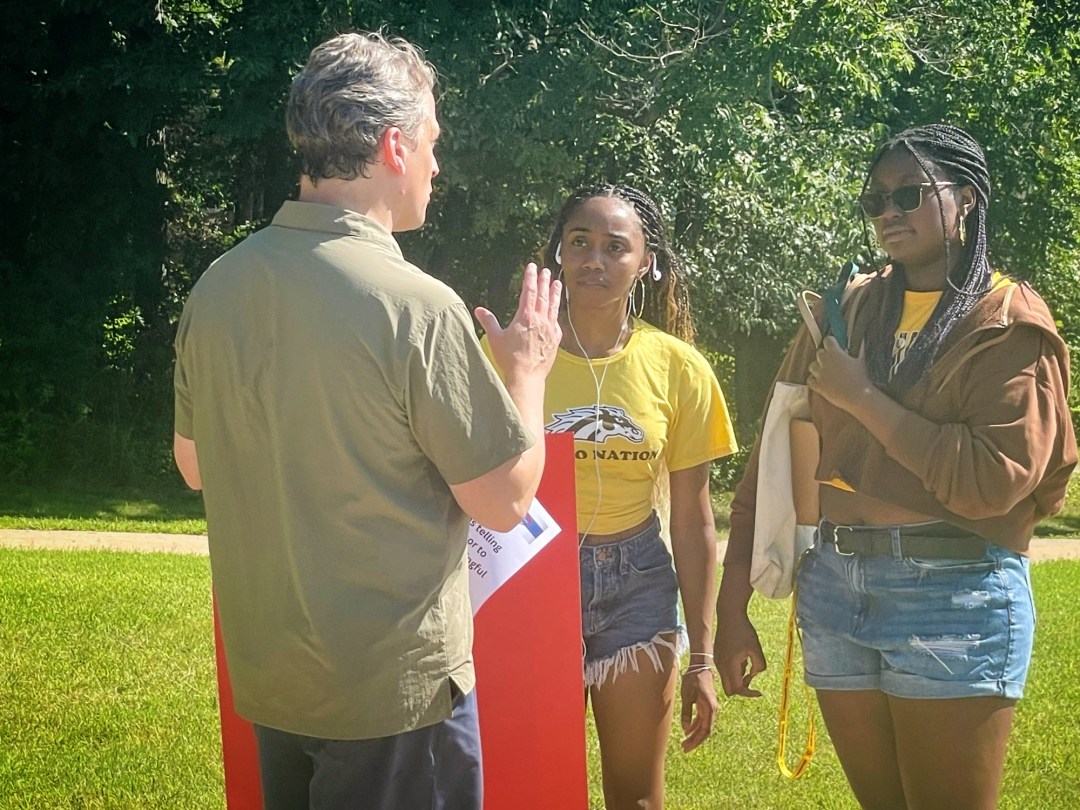
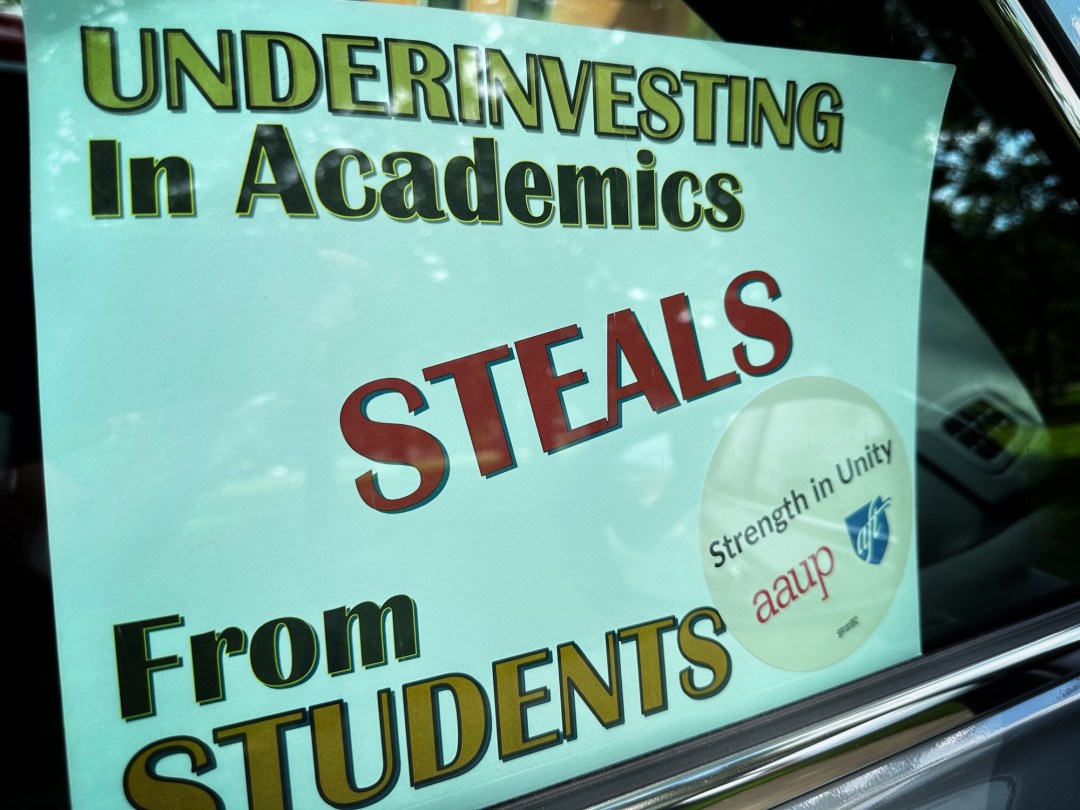



 Strength in solidarity