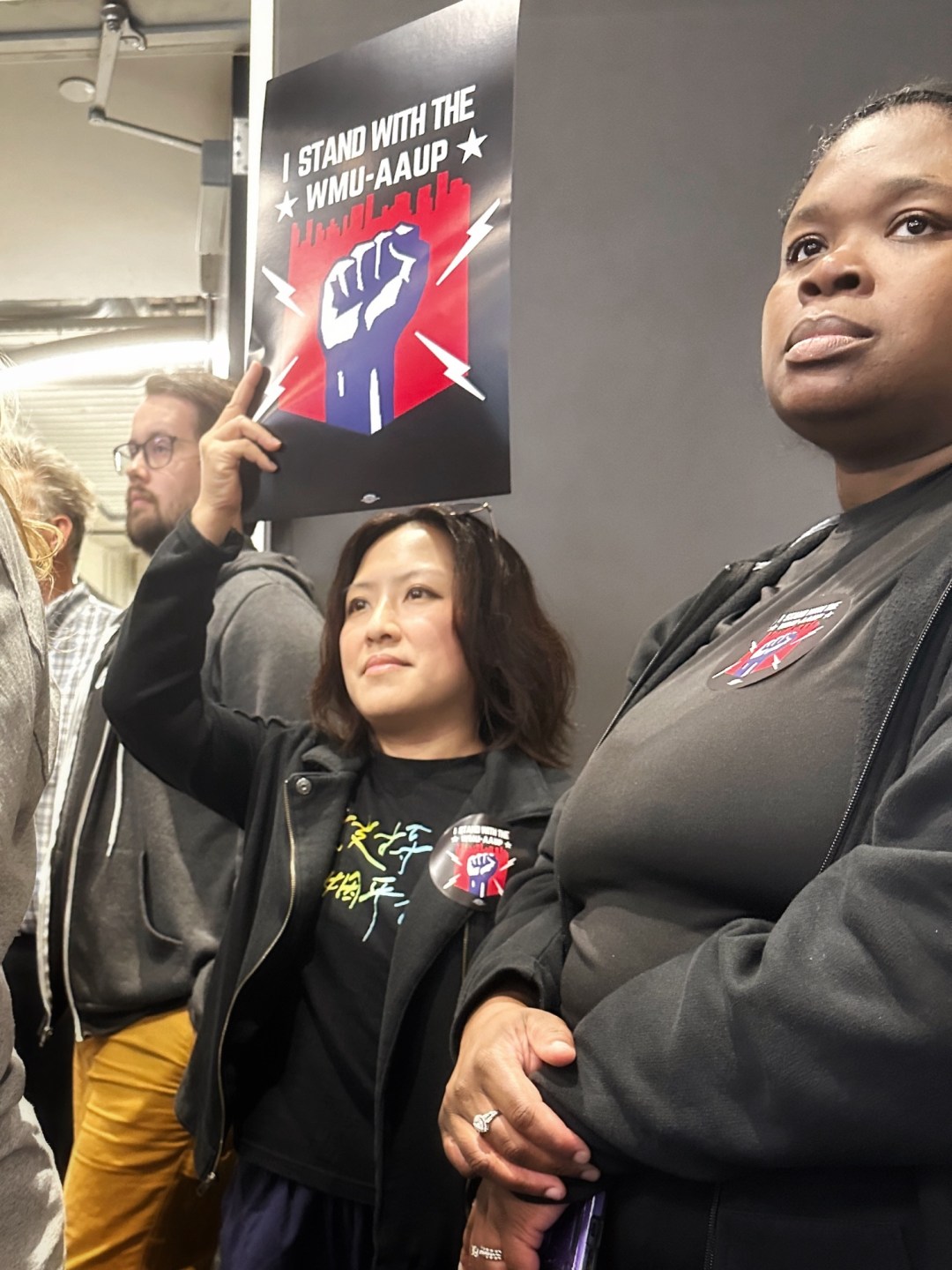
WMU-AAUP reaches Tentative Agreement in negotiations

a message from WMU-AAUP Chief Negotiator Andrew Hennlich and WMU-AAUP President Cathryn Bailey

After a grueling fight extending a month beyond the negotiation deadline, the WMU-AAUP Executive Committee has approved a complete tentative agreement (TA) on the 2024-26 Contract reopener of Articles 32 and 33. Critical details have been provided directly to members to help prepare for an upcoming ratification vote. While the WMU-AAUP did not get everything proposed, the overall results are very good. It is evident that members’ powerful demonstrations of solidarity have had impacts both on these negotiations, and, we anticipate, on future negotiations and WMU labor dynamics in general. The fact that our entire contract—including both of these Articles—will be up for renegotiation in less than two years from now may serve as helpful context as you consider where we’ve landed now.

For additional context about the unusual nature of the fight we’ve been engaged in during this incredibly challenging “wage reopener,” please see the post linked here and that was separately sent by email to the full membership on Sept. 9. In short, after the negotiation deadline passed on August 30th, the WMU Administration no longer had any clear obligation to provide the faculty with a salary raise. As Article 49 of the WMU/WMU-AAUP Agreement states, the Administration could simply choose to implement its last official offer once negotiations continued past the August 30th deadline (subject to continued bargaining by both sides), but, again, had no obligation to do so. As we had previously noted, this helps explain why they were so willing to drag their feet about salary raises as the deadline approached.

In short, after that deadline passed, and with the Administration’s generally dismissive attitude to faculty concerns consistently on display, the threat loomed that the faculty might get no raise at all. Indeed, we are confident that it is only due to intense pressure from WMU-AAUP members and allies that the Administration has now agreed to a higher number than its previous last official offer (as of August 30), even if this higher figure is still not as high as we would like. Indeed, if the Administration had felt it could get away with agreeing to no raise at all, we don’t doubt that that is what they would have done. In any case, the salary increase figure in this approved tentative agreement is as follows: A total increase of 7.25%, that is, 4% in 2024-25 (retroactively applied), and 3.25% in 2025-26, with an additional one-time lump-sum-payment of $1000 in 2025-26.

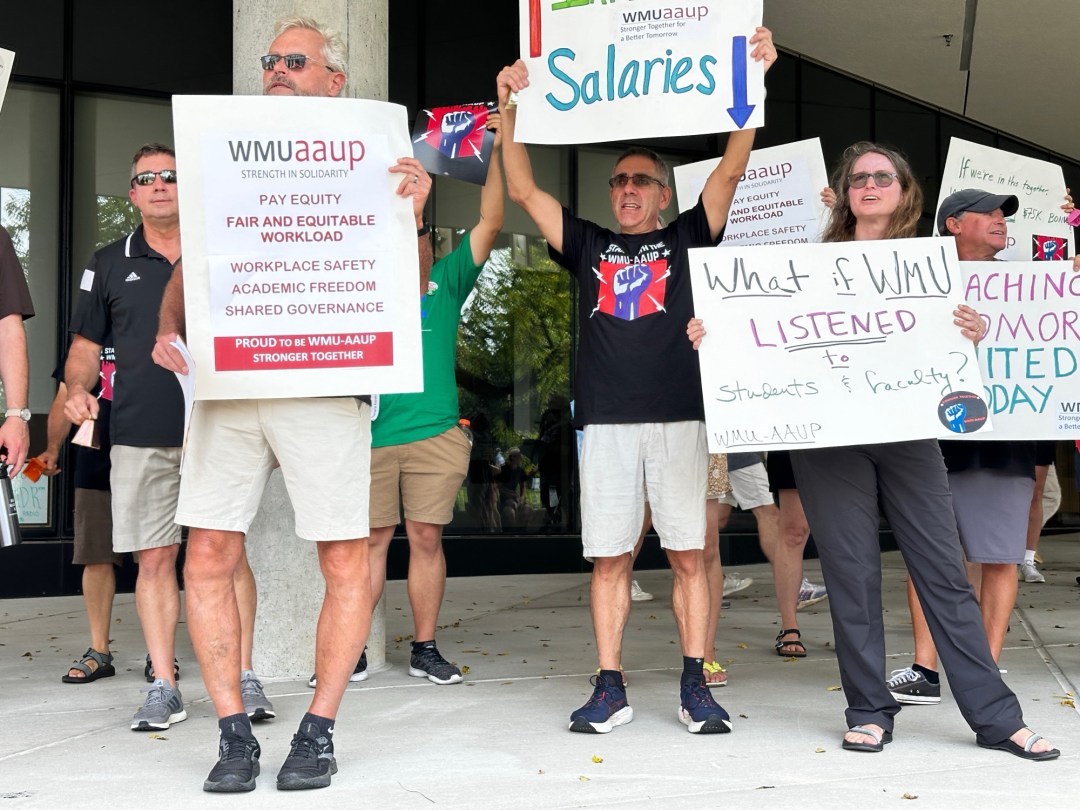
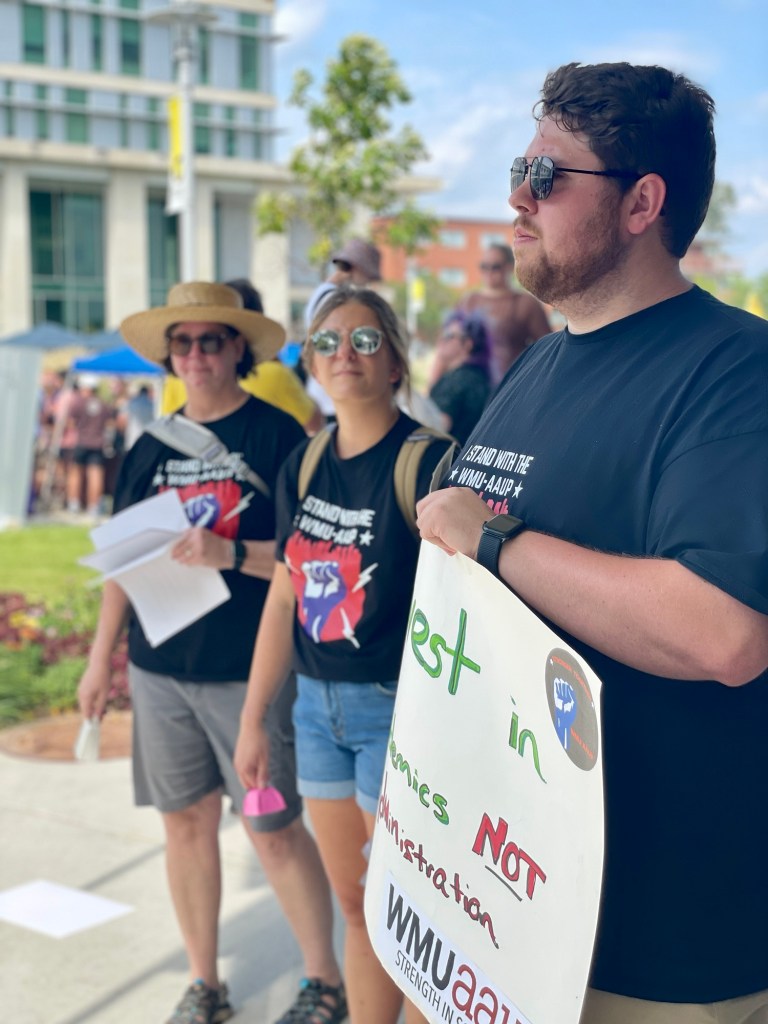
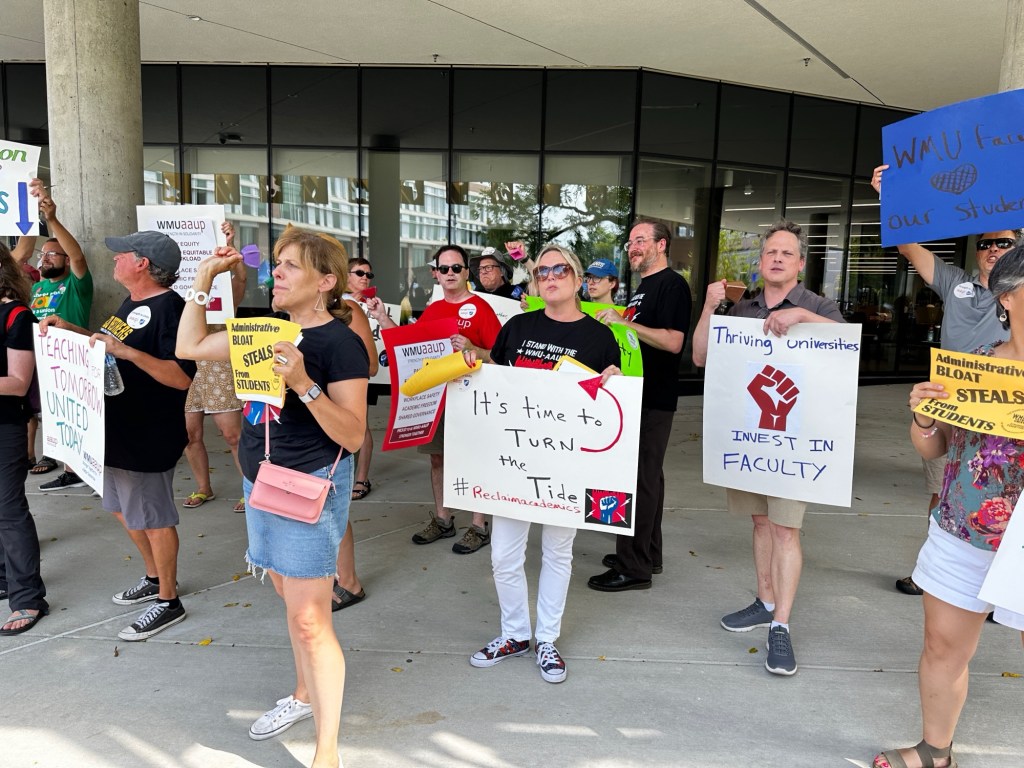
Although the WMU-AAUP did not get everything we had proposed, and that the faculty deserve, we have taken some strong steps forward. For one thing, some revised negotiation approaches, including the Chapter’s use of a healthcare analyst, has helped empower the WMU-AAUP in ways that should impact future negotiations and labor relations more generally. In addition, the historically impressive turnout of members and allies at rallies and demonstrations has sent a clear message of strength and determination that will be felt well into the future and in multiple arenas. While WMU employees have many remaining fights to reclaim and restore our university’s academic heart, the energy and solidarity of the past few months will propel us forward.

Following WMU-AAUP procedures, the next steps regarding negotiations are as follows:

-The WMU-AAUP will present the tentative agreements on Article 32 and 33 and will field questions from members at the 11 October all-member Chapter meeting. 

-In the days following the October 11 meeting, the full tentative agreement will be put to a ratification vote of the full membership.

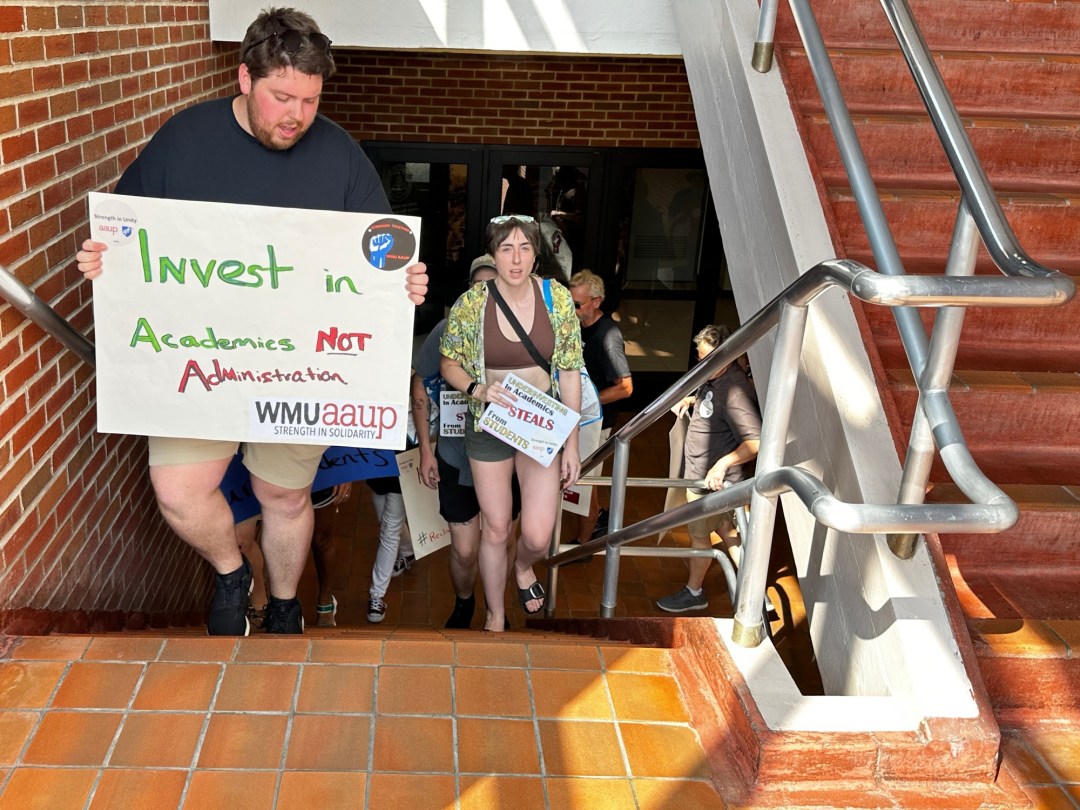


Western Michigan University withholds faculty raises to force its lowball offer

A negotiation message from WMU-AAUP President Cathryn Bailey and Vice President Christopher Nagle

As we shared in a previous message, it appears that the Western Michigan University Administration may have intended all along to stonewall under the guise of “ongoing negotiations” in order to force the faculty into accepting a lowball compensation offer. In short, while the Administration has gone through the motions of negotiating on compensation—and continues to do so—the Administration’s lackluster efforts at compromise suggest a plan to force the faculty into accepting a skimpy increase or risk getting no raise at all. 

As a reminder that, this summer the WMU-AAUP has been focused, not on its entire contract with Western, but, rather, a “reopener” of compensation and healthcare. This means that the contract as a whole remains in force while these two critical articles are renegotiated. While the process more or less functioned with healthcare negotiations—due to open enrollment deadlines, the Administration was eager to get a tentative agreement in place—they seem to feel no such urgency about across-the-board raises. And, as per Article 49 of the WMU/WMU-AAUP Agreement, the Administration may simply choose to implement its last offer if negotiations continue past the deadline, although this is subject to continued bargaining by both sides.

As of now, the Administration’s last offer was, roughly, three percent in each year, representing just 1/4 of one percent increase over their initial offer of 2.75. Why has the Administration barely budged from its low number? One explanation is that they have been planning all along to simply force a low salary onto employees, i.e, their final best offer. Consequently, rather than making an effort to compromise, they have been going through the motions of salary negotiation but failing to budge. 

At the same time, the WMU-AAUP proposal has gone from 11.25/11.25 (with additional annual research supplements), to 8/8, and we have urged the Administration to provide a genuine counteroffer. Crucially, however, while the Administration “may” implement that last offer—a 3/3 they have emphasized the fact that they need not do so. One potential result is that employees could get no raise at all if the WMU-AAUP refuses formally agree to a lowball raise that many of our members have identified as unacceptable. If this process were to continue to unfold, then the Administration would likely attempt to the blame the faculty union for refusing to agree to that lowball offer.

Concern grows when one further considers that the Administration has refused to make itself reasonably available to negotiate at key times. They were not available to negotiate on the crucial last day (August 30) and now seem to be settling on occasional availability. In addition, the process of “negotiation” is one in which our team—including an attorney whom we must pay by the hour—is mostly left to languish in a conference room all day while the Administration authorizes the mediator to reiterate its position to us from time to time. While maintaining this shallow performance of negotiations may not be a big deal for WMU—they seem untroubled at spending hundreds of thousands of dollars —perhaps millions—on an anti-union attorney—this wasteful process is, as they know, a hardship for the WMU-AAUP. This is because of attorney fees and because our team members are busy faculty members and not administrative bureaucrats. 

We reiterate this message to you now because we will not be surprised if the Administration begins to suggest that the faculty union is to blame for the Administration’s failure to implement that “last offer” raise while it continues to engage in its unconvincing performance of negotiating. If so, please keep in mind that they are willfully refusing to provide the faculty with meaningful compensation increases despite the fact that they Western can afford it and that faculty deserve it. Please further note that nothing prohibits the Administration from providing you with that minimal “last offer” 3/3 increase while negotiations continue. In fact, each day that goes by that you see no such increase on your paycheck is cause for concern. Does President Montgomery plan to hold even this small compensation increase hostage by threatening us with a zero increase?

As you consider all this, please also keep in mind that the Administration’s manipulative, disingenuous “negotiating” strategy only works if they continue to believe they can get away with ignoring employee dissatisfaction and solidarity. To that end, the Chapter will continue to help focus the faculty’s ongoing determination to restore investment in Western’s academic mission. See below for ongoing suggestions about how you can participate.

How you can get involved:

  • plan to attend our rally at the next WMU Board of Trustees meeting on Thursday, Sept. 26th at the Student Center (scheduled to begin at noon). Wear your WMU-AAUP t-shirt if you have one or a black shirt if you don’t
  • subscribe to the official WMU-AAUP blog to be notified by email of new posts, and be sure to review past posts; partly due to concerns about reliance on the Administration’s email system, it is important that we have multiple ways of providing information to members and allies
  • stop by Montague House, grab some posters/fliers, and we’ll provide you with some suggestions about what to do with them; order a WMU-AAUP t-shirt today so you’re ready to participate in ongoing actions 
  • reach out to members of the Board of Trustees, and to local and state elected officials, and ask for their support in our efforts to get WMU to renew its commitment to its academic mission; here’s an example of letter sent to each Board member from WMU-AAUP president, Cathryn Bailey 
  • follow the WMU-AAUP on Facebook and Twitter (X) and share our posts widely; again, having multiple methods of quickly connecting with members and allies has become increasingly important 
  • stand ready to participate in ongoing actions, and be sure to share WMU-AAUP communications with colleagues to ensure that this ongoing matter remains on their radar 


Unrest at Western Michigan University as academic employees fight back

While the most dramatic story unfolding at Western Michigan University may be the ongoing negotiation battle between professors and the Administration—with the possibility of a strike and Vote of No Confidence still on the table—the context for the recent and ongoing unrest is actually much broader. After many years of what is coming to be known as a “disinvestment by the Administration in its core mission,” employees from across campus have shown up in force at protest rallies. As the president of WMU’s Chapter of the American Association of University Professors, Cathryn Bailey, put it: “Yes, my colleagues are battling for meaningful salary increases for professors, but this is also part of a larger fight to get Western to start investing in teaching and learning again. We’re advocating for ourselves, but also for our students’ education and the value of their WMU degrees.” 

Against this backdrop, it may not be surprising that the “disinvestment” problem is being felt all over campus and in various ways. For example, graduate student Mel Robins (not his real name) shares that when he got his acceptance letter from Western Michigan University, he was thrilled. “I’d turned down much better financial packages from other schools because some of the best faculty in my field were at Western,” he says. Unfortunately, although Robins has loved working with his professors and student cohort, he quickly discovered chronic logistical challenges associated with his role as a teaching assistant, including shifting assignments, untenable teaching loads, and problems related to money owed to him by WMU, all of which were attributed by the Administration to its supposedly shrinking budget. “TAU (WMU’s Teaching Assistants Union) has been great, but I just can’t get over how uninterested the Administration seems to be in attracting and keeping its graduate students.”

According to TAU President Thomas Fisher, as negative as Robins’ experience has been, there’s been an even more worrisome reality unfolding behind the scenes at Western, what Fisher refers to as the Administration’s “fundamental and growing disrespect for its labor unions.” As Fisher puts it, “I’m talking about really basic things here: Administrators who treat employees like underlings or enemies [including at the negotiation table]” and “a knee jerk desire to escalate conflict rather than course correct when we point out contract violations.” Although Fisher is now one of WMU’s longest serving TAU presidents, he did not arrive in Kalamazoo planning to be a union activist graduate student. “The more I’ve seen of the Administration’s disinvestment in academics and its increasingly brazen disregard for its employee unions—including student workers—the more active and determined I have become,” he says. 

As the Administration’s apparent anti-unionism has escalated, Western’s three academic unions, all now united under the powerful AFT umbrella (American Federation of Teachers), have been closely collaborating, both to diagnose and address the problem. Among the causes and symptoms they’re pointing to has been President Montgomery’s and Provost Vasquez Heilig’s commitment to use a notoriously anti-union, aggressive law firm to “deal with” its academic employees, including at the negotiation table. “We used to have an actual office of Academic Labor Relations on campus,” explains Tim Bober, president of WMU-PIO (Professional Instructors Organization). “It wasn’t perfect by any means, but at least there was someone there who understood academic values and didn’t just immediately try to beat us into submission.” And while, as a chronically underpaid, highly experienced WMU instructor, Bober has many concerns about the Administration’s priorities, its naked disdain for its own employees has taken a toll on him. “Basically, they treat us like we’re nothing,” he says. 

All three of Western’s academic labor presidents point to WMU’s once-robust ALR (Academic Labor Relations) office to help explain the university’s burgeoning labor crisis. Now entering a second academic year led by an interim director for whom this is just one administrative gig among many, that office has become more of an obstacle than a place to resolve disputes. Bailey notes the “fundamental shift” that occurred when the Administration hired an external attorney a few years ago to direct its ALR office rather than appoint a faculty member as had always been the case. “Suddenly, we were forced to deal with aggressive professional attorneys right off the bat, with no reliable mechanism to resolve the kinds of issues that are just bound to come up on any campus.” As a result, Bailey explains, the WMU-AAUP has been forced to file a record number of grievances and arbitrations. “President Montgomery apparently has no limit when it comes to the student tuition dollars he’s willing to spend on anti-union attorneys,” Bailey says, estimating that “we may now be talking millions of dollars. And it’s obvious that the Administration is trying to force us to choose between protecting employees’ rights and expensive litigation.” 

As compensation negotiations between WMU-AAUP employees and the Administration proceed past last Friday’s negotiation deadline, Bailey is not optimistic about the Administration’s willingness to make meaningful compromises at the table. “The WMU-AAUP’s team has already made significant compromises in its proposals, she explains, “while President Montgomery’s team has only come up by minuscule fractions after endless stonewalling and foot dragging.” At the same time, she says, she is “heartened” by the determination of colleagues in multiple employee groups urging the WMU-AAUP to continue fighting for as long as it takes.

“The fact that employees are increasingly willing to disrupt campus to draw attention to this problem tells you how urgent we think it is,” says Fisher. He adds somberly that “WMU’s reputation as a great place to learn and work can’t possibly survive if things continue as they have.”

WMU-PIO President Tim Bober and WMU-AAUP President Cathryn Bailey

Stolen wages at Western Michigan University: The nickel and diming of WMU-AAUP employees

a negotiation message from WMU-AAUP president, Dr. Cathryn Bailey and vice president, Dr. Christopher Nagle

With wage-reopener negotiations between the Western Michigan University Administration and the WMU-American Association of University Professors now continuing on past the Friday deadline*, there’s another element to the compensation story that deserves attention. Because it lacks the drama of radically eroded salary figures, and because its impact is cumulative, this aspect of the university’s whittling away of employee income threatens to get lost in the shuffle. 

But there is no better time to talk about the hidden, growing costs of simply doing one’s job as a professor—a trend rationalized at Western by its supposed “responsibility-centered,” SRM budget model—than during negotiations, and as the Western Administration implies that the faculty are greedy and out of touch. Many of us, however, are well aware that, when we are under-resourced—starved of supplies, travel funds, work space, equipment, and more—it effectively reduces our take-home pay and often negatively impacts students.

Here are a just a few examples: 

⁃ the erosion and erratic supply of professional travel funds: professors, quite simply, need to travel to attend conferences, perform research, collaborate with other faculty, and the like. For most, this is necessary both to earn promotion and tenure, to develop students as scholars, and to remain competent in our fields and classrooms. 

Nonetheless, although Western markets itself as a research-intensive university, it has spent tens of thousands of dollars this past year alone on legal fees to ensure that it has no concrete financial obligation in this area. This is, to be clear, merely one area in which WMU has been disinvesting in its research mission, but it is high on the list of nickel-and-diming, with numerous faculty reporting that they now pay out of pocket or have been forced to stop engaging in these baseline professional activities. 

⁃ the chipping away at reimbursements for other sorts of professional travel, for example, between WMU regional sites for professional purposes related to teaching, research, or service. Increasingly, faculty are being told they must personally pay for fuel to teach a course at a satellite WMU campus or to come to Kalamazoo even to perform assigned work or service, including that which is necessary to directly support students. 

⁃ a refusal by the university to supply necessary “work tools” in a reasonable fashion. To take one example, there have now been a number of reported cases where faculty have been expected to pay for their own work laptops or monitors because the equipment they had been assigned broke or wore out. In one case, a faculty member was stripped of network access—which she needed to teach her classes and communicate with students— when she failed to return a loaner machine on time after the university insisted that she pay for a new machine out of pocket. 

In addition, there are reports of faculty being expected to buy lab supplies, safety wear, photocopies, awards for students, software, studio art space, and, with the near decimation of the library’s budget—access to journals and databases and books. One faculty member reported borrowing from a friend at Grand Valley State—not a research-intensive school, by the way—because our own research-intensive university claimed it couldn’t afford databases or books.

Again, these are just a few examples of how professional expenses are being shifted onto faculty. An ancillary expense has been that WMU’s disinvestment in students, both graduate and undergraduate, has created a situation in which employees across the university feel compelled to step up to fill in critical financial gaps. For example, our campus now abounds with stories of employees—in various employee groups—who have provided books, lodging, meals, and even emergency tuition payments for desperate students. 

The fact that Western Michigan University has permanent charity opportunities for employees to fund students’ basic needs points to a normalization of the fact that the university now effectively expects employees to shore up such deficits. While faculty love our students, and such generosity is to be lauded and supported—indeed, we both participate— the institutional reliance on them further shifts the financial burden of supporting students from the university and onto employees. What does it say about Western Michigan University that it chooses to spend millions on its elite administrators, Division I football, fancy new buildings, and corporate attorneys and consultants, but accepts that food scarcity will be a basic condition for many of its students, both graduate and undergraduate?

We are perhaps all used to this sort of thing with respect to public school teachers, where radical political forces have long suggested that it is a favor to them to pay them at all—let alone to supply them with the supplies and continuing education they need to do their jobs—but this tendency has also been spilling over into higher education. And if third grade teachers can be painted as uppity for daring to request raises and money to buy glue sticks, of course it will be easy enough to portray university professors as selfish elitists. 

Neither characterization is accurate, of course, but with the bully pulpit of institutional authority, communications, and PR smoke-screens to support them, the WMU Administration seems committed to justifying its “starvation-as-management” approach, according to which cutting away at expenditures is desirable regardless of the impact on key services or Western’s academic reputation. And while this chronic disinvestment in Western’s core mission is unlikely to make the news, it helps explain why so many employees are so frustrated and willing to fight on for as long as necessary.

*see Article 49, page 136 of the current WMU/WMU-AAUP Agreement

Got an experience to share about how professional expenses have been shifted onto you at Western? Reach out to staff@wmuaaup.net, or to the WMU-AAUP president or vice president.

to be notified of new posts by email, subscribe to this blog here

Destruction at union headquarters as WMU ramps up its campaign against its own employees

The Western Michigan University Administration’s recent, unprecedented abuse of its campus-wide email system is a classic, anti-union propaganda effort to divide and pit employee groups against one another. In a series of campus-wide emails—full of false and misleading claims about the university’s own faculty members—the Administration has painted itself as generous and benevolent during tense compensation negotiations (deadline tomorrow). It is WMU’s faculty who are greedy and entitled, the messages suggest, providing manipulated self-serving numbers to “prove” its case. 

What’s going on here? President Montgomery knows that if he can get employees to bicker with, and even attack, one another, we’ll stop focusing on him. The result of his campaign so far? A few appalling, vicious anonymous emails to WMU-AAUP leaders, and some willful destruction of union fliers at the WMU-AAUP headquarters. But another result, one surely not intended by our labor scholar president, has been a flood of solidarity from Western employees all across campus. Indeed, each of our recent, wildly successful demonstrations has included folks from no fewer than FOUR Western Michigan University employee groups, some appearing in public with us despite their fear of retaliation.

Again, President Edward Montgomery is a labor scholar, and he knows better than most that “United We Bargain, Divided We Beg.” Not surprisingly, he would rather have employees focused on one another rather than his own exorbitant compensation, weird financial priorities, and lack of vision for our beloved university. Does the fact that his propaganda seems to be leading to attacks on his own faculty—putting students too in the firing line—make any difference to him? Is the Western Administration—with its private anti-union lawyer riding shotgun for the president—so committed to beating its professors into submission that it will destroy our campus climate in the process? 

Oh, and if you want a look at some data provided by an actual qualified, external analyst of academic financial data rather than the Administration’s propaganda machine, here you go. And for more detailed rebuttals of the Administration’s false and misleading propaganda, see here and here. Please share this message far and wide. Remember, Western’s president has the might of the university’s communication system (and ample coffers) at his fingertips, while we must rely on our member and allies. And while we are working with our attorney to build an Unfair Labor Practices complaint against the Administration regarding these actions, we do still need to ensure that employees’ voices are not drowned out by management.

What can you do?

  • Stop by Montague House to pick up fliers and posters in support of our ongoing visibility campaign
  • Reach out to members of WMU’s Board of Trustees—President Montgomery reports to them—and urge them to fix this now!
  • subscribe to this blog, share this post, and keep abreast of ongoing communications from our leadership, including this recent interview with our president
  • order a WMU-AAUP t-shirt today and wear it to show your solidarity for all the frontline Western Michigan University employees who actually do the work that makes WMU work!

Western employees occupy the Admin Building: Negotiation update and urgent call for action

a message from WMU-AAUP president, Dr. Cathryn Bailey

With the negotiation deadline just TWO DAYS away, the WMU Administration continues to insist that Western still can’t afford meaningful raises for employees. Even after two long days of mediation—prematurely initiated by the WMU Administration for self-interested reasons—there has been little change in their position. As you may recall, the Administration proudly made an initial raise offer of 2.75/2.5 (first and second year) and then refused to budge during countless hours of negotiations, despite the fact that the WMU-AAUP had compromised significantly—our offer at that point had been an 8/8. 

The Administration’s latest offer—after days of intense public action and other forms of pressure by the WMU-AAUP and allies—is sort of (but not really) a 3/3. The WMU-AAUP has, for its part, continued to bargain diligently and in good faith—for strategic reasons, we cannot share more details here—recognizing that all negotiations require compromise. However, as you have probably noted, the Administration has, yet again, come up by an itty bitty baby step—¼ of A SINGLE PERCENTAGE point—making it clear that President Montgomery, his anti-union attorney, and his negotiation team have not yet been persuaded of our love for Western or our determination. Our public actions are making a difference—see a few photos below from Move-In Day and Bronco Bash—but we must keep up the pressure.

As I urge you to show up today at noon in front of the Student Center—wearing black or red if you don’t have a WMU-AAUP t-shirt—I’ll underscore a point I’ve been shouting from the rooftops (including in this radio interview yesterday): The battle President Montgomery has been waging on WMU employees at the table is only the latest assault in a long series of attacks over many years. This Administration does not merely aim to save some pennies now, but to break the back of Western’s powerhouse faculty union once and for all. President Montgomery, a labor scholar himself, understands perfectly well that if he can drive the WMU-AAUP to its knees—to make one of the oldest, proudest faculty unions in the country beg for scraps—then he will clear the way to further exploit other Western employee groups as well. So, again, for WMU employees, what’s happening now is partly about securing decent raises, but it’s also about refusing to cede to abusive bureaucrats who seem determined to starve WMU’s core mission while enriching themselves. 

If you both want decent raises and are willing to fight for the soul of our university, please: 

  • stop by Montague House now, grab some posters/fliers, and we’ll provide you with some especially strategic suggestions about what to do with them (key locations will be changing daily)
  • attend our rally TODAY, Aug 28 (also open to allies, students, and community members) at noon in front of the Student Center. Wear black or red if you don’t have one of our t-shirts
  • subscribe to the official WMU-AAUP blog for the latest updates and calls to action, and follow us on Facebook
  • self-nominate to serve on the strike preparation working group if you’re a member by emailing staff@wmuaaup.net
  • reach out to members of the Board of Trustees, and to local and state elected officials, and ask for their support in our efforts to get WMU to renew its commitment to its academic mission, to its employees, and to our students and their families (here’s an example of letter sent to each Board member from WMU-AAUP president, Cathryn Bailey) 
  • share our message widely, by email, social media, and in conversation. Remember, the Administration has been using its all-campus email to discredit employees while we must rely on one another to get the word out

Got questions? Reach out to staff@wmuaaup.net, or to the Chapter president or Vice President. Additional info at www.wmuaaup.or

Participants from FOUR different employee groups showed up to both Move-In Day and Bronco Bash to stand with the WMU-AAUP
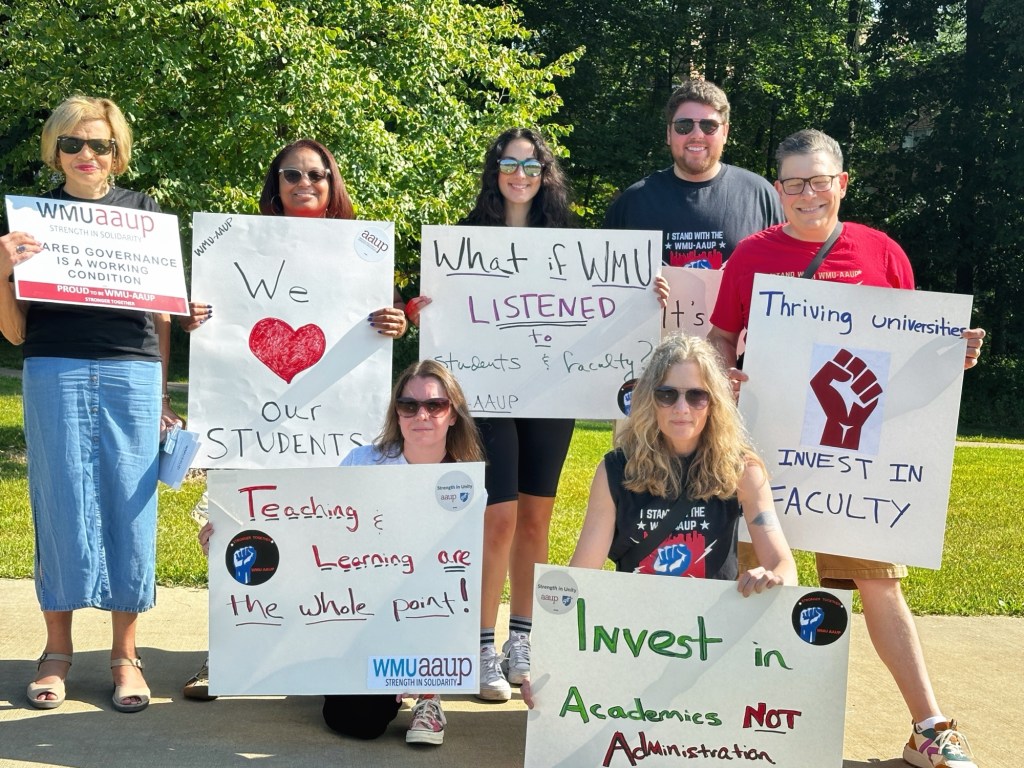
On a steamy hot day, scores of faculty and allies rallied in the heart of Bronco Bash to shout our determination to fight for our students and ourselves
Making their way through Bronco Bash, the group shouted support for WMU’s academic mission and then continued to rally inside the Administration Building, including sharing their hopes for a new future for Western
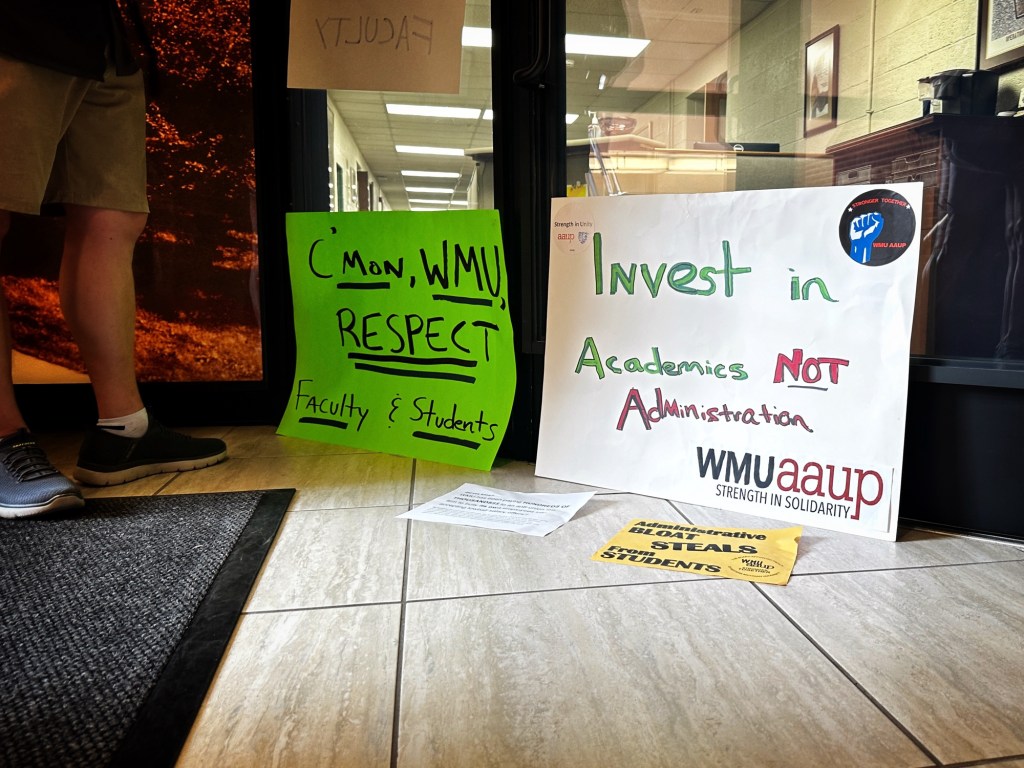
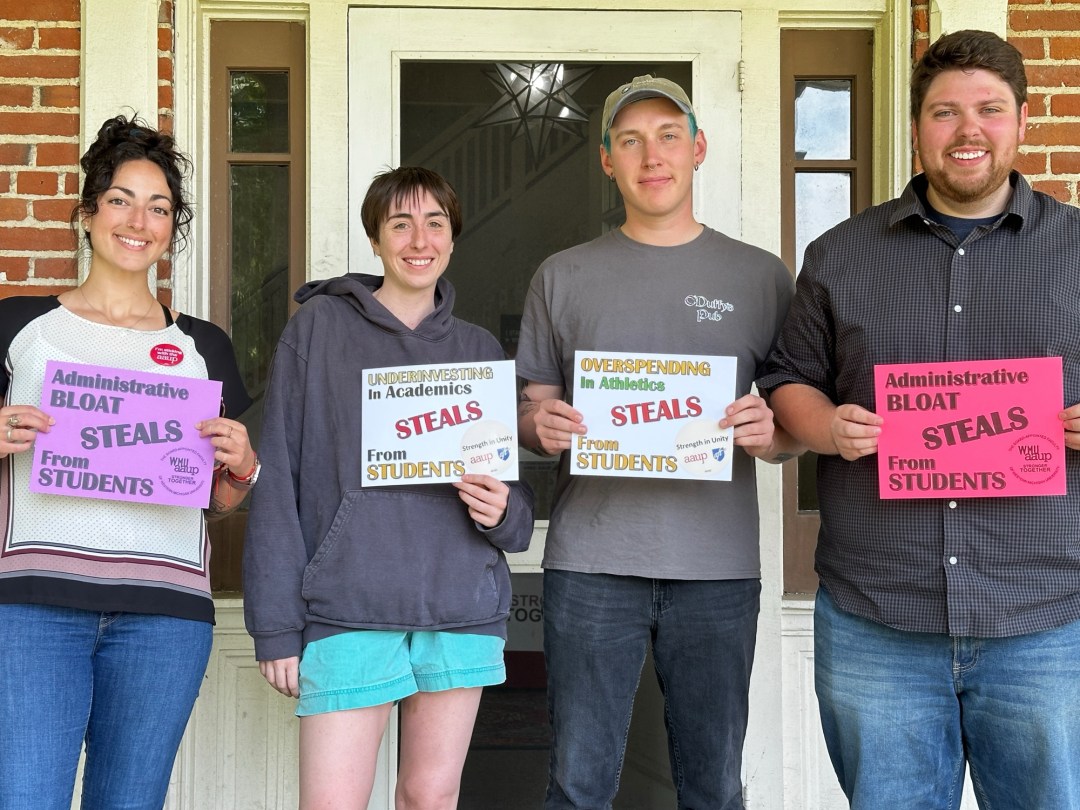
President Montgomery and Provost Vasquez Heilig were absent, but signs and fliers were left for them outside their offices
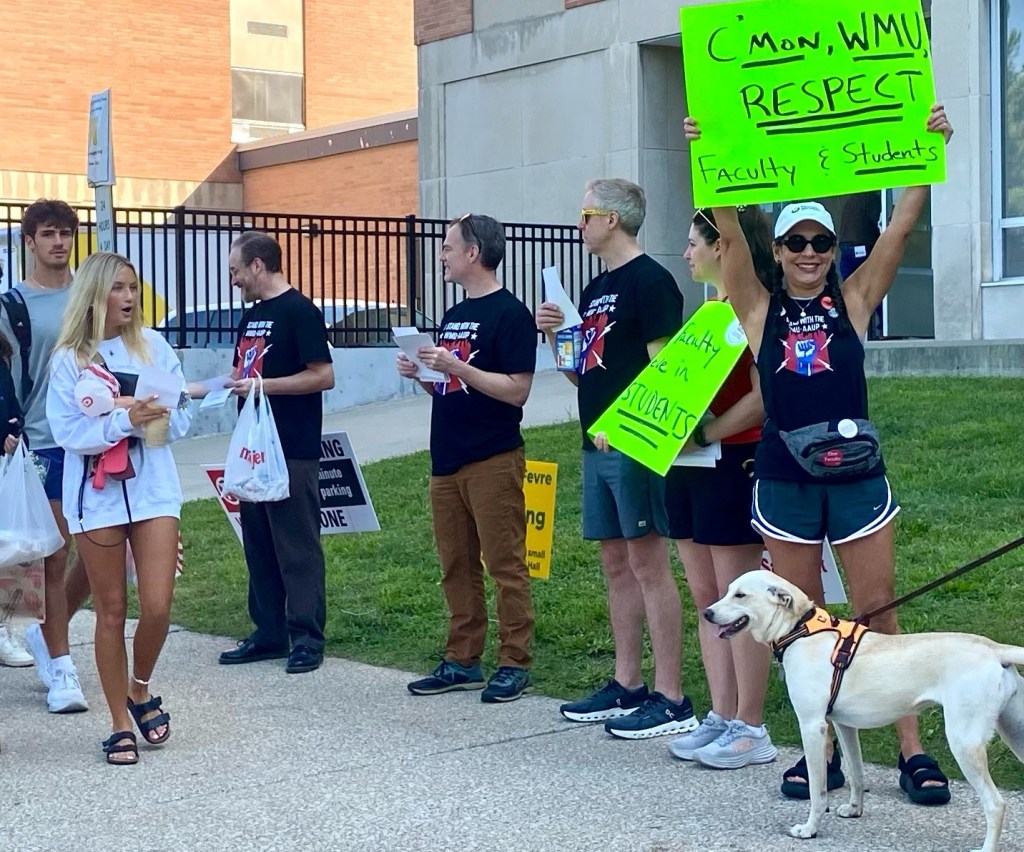
In addition to the Bronco Bash action, scores of faculty and allies rallied at Student Move-In Day, sharing treats with students and providing information about the escalating tensions on campus
Another scene from Move-In Day where many students and their parents cheered on WMU-AAUP members and allies

Combatting the Admin’s Dirty Negotiation Tactics at Western: “The next 72 hours are critical!”

an urgent negotiation message from Cathryn Bailey, professor and president of the faculty union, the WMU-AAUP

Dear Western Michigan University Colleagues and Allies,

I’ve been a professor for over 30 years and I’m seeing things play out during these negotiations with the Administration that I could never have imagined. 

First, some of the bad:

  • in what seems to be a historically unprecedented move, the Western Administration is effectively attacking the faculty in campus-wide emails even as it has failed to budge on its initial lowball compensation offer at the table; see here and here for WMU-AAUP responses, and please share them widely. Remember the Administration has the power to attempt to discredit and undermine employees at the push of a “send” button; we rely on YOU to help spread our message across campus and beyond
  • on Friday, in a tactic meant to pressure the faculty into accepting a low offer—and with a full week of negotiation time still remaining—the Administration’s anti-union corporate attorney made an official call for mediation, a usually conservative process that we (and the Administration) expect to favor management. The mediation is scheduled for today, but is not binding. If mediation does not lead to results consistent with the overall goals of the faculty, we will not accept it.

Next, some of the good:

  • there has been an outpouring of support from a whole range of WMU employee groups, across Michigan and, especially gratifyingly, from students and their families! The eyes of the nation are turning toward WMU, especially as the Administration seems determined to “beat” its own employees. While the Administration may be congratulating itself today on its capacity to stonewall and insult its own employees—and, yes, some of them visibly seem to enjoy doing this—the tide has already shifted. Further, as you may have noticed, the national appetite of working people to tolerate overpaid, anti-labor bureaucrats has waned considerably 
  • working with state and national labor leaders, the WMU-AAUP is prepared to remain in this for the long haul and to continue to escalate action; We understand that, for many Western employees, falling wages is only a symptom of a larger campus crisis, one created and sustained by the weird financial priorities of career administrators, some for whom Western will merely be a line on their resume. These days, I can no longer walk about campus—or do my errands in town—without a colleague or ally who recognizes me urging “Strike!” When I say that I’ve never seen anything close to this level of outrage from employees, this is the sort of thing I’m talking about
  • the key to success is in members’ hands. There are concrete steps you can take starting right now to make sure this Administration finally listens to employees. As you’re deciding whether you’ve got 30 minutes or an hour to volunteer, consider this: As bad as things have been at Western, imagine what life would be like for students and employees if the WMU-AAUP were to be driven to its knees now? Indeed, it is precisely because we are a union powerhouse at Western that the Administration is so determined to beat us. They know that the way to further exploit other employee groups will be even clearer if they can make an “example” of the faculty now

What can you do? 

  • stop by Montague House TODAY, grab some posters/fliers, and we’ll provide you with some especially strategic suggestions about what to do with them (the messaging and key locations will be changing daily, with surprise as a key strategic factor)
  • meet up for Bronco Bash tomorrow (in the Sangren Hall Lobby at 3:00). Our mobile group will distribute more fliers, and “tour” the Administration building
  • attend our special outdoor all-member gathering (also open to allies, students, community members, and the press) on Wednesday (August 28) at noon. There will be a real-time negotiation update, more fliers, and a live reading—we got a new bullhorn!— of President Montgomery’s latest appalling compensation agreement with our “impoverished” university; in addition, you can expect a musical rendition of “Cry Me a River,” a response to the Administration’s endless cries of institutional poverty
  • reach out to members of the Board of Trustees, and to local and state elected officials, and ask for their support in our efforts to persuade WMU to renew its commitment to its academic mission, to its employees, and to our students and their families (here’s an example of letter I sent to each Board member)
  • If you’re a member, contact staff@wmuaaup.net to self-nominate for the No-Confidence Working Group or for the new Strike Preparation Working Group. The latter will help study, and make recommendations regarding, strike logistics in case the Administration continues down its current path
  • Stand ready for more action as we will increasingly be relying on surprise as a strategic element. Also make sure you’re following us on Facebook and subscribed to our official blog: http://www.thewmuaaup.com 

In solidarity with my WMU employee colleagues, and with our students and their families, all of whom deserve so much better

Cathryn 

PS: In addition to following the WMU-AAUP on Facebook, feel free to send me a friend request; I often repost WMU-AAUP items there, and it’s a fun place to enjoy some additional camaraderie during these hectic times. 

Sixteen months after WMU’s No Confidence Vote: Have things gotten better at Western?

A message from WMU-AAUP President Cathryn Bailey and Vice President Whitney DeCamp

It has now been sixteen months since the Board-appointed faculty at Western Michigan University overwhelmingly voted to approve a vote of no confidence in WMU’s President. Despite this clear message demanding change, and ample additional evidence of a morale crisis as demonstrated by a Faculty Senate survey and the administration’s employee engagement survey, the president remains in his position. Further, with the exception of a new provost, the cast of supporting characters — including most of the vice presidents, associate provosts, and deans — also remains largely unchanged. As another academic year winds to a close, this is a good time to take stock of where we’ve come over the past year and half or so.

Although the perspectives of individual faculty, staff, and students will obviously vary, from our point of view, many of the concerns expressed by the no confidence vote remain largely unresolved. A few are especially worrisome because they represent not merely discrete problems that might be addressed through targeted policy changes, but an ongoing corrosion of the foundation of Western’s campus culture. For example, leadership’s “failure to respond appropriately to feedback and concerns” and the “unprecedented narrowing of the practice of shared governance” are higher order, systemic deficits that make more specific problems — for example, enrollment challenges — much harder to address. Moreover, leadership failures that continue to damage WMU’s status as a “great place to learn and work,” create a vicious cycle of campus dissatisfaction, making our university less attractive to new talent and energy that might help to renew and reinvigorate it.

Despite some modest improvements in some areas of enrollment data last year, cause for concern has remained steady or grown in other important areas, including:

– After the precipitous layoff of numerous key employees a few years ago, chronic under-staffing and problematic hiring delays.

– Further violations by WMU of shared governance and due process in its pursuit of rapid restructuring and in other decision-making.

– The administration’s refusal to take basic steps to assure impartiality in the grievance process, further undermining confidence that faculty concerns will be fairly considered.

– A lack of transparency, for example, about challenges regarding the new student center.

– Unacknowledged implications of the new “competitive” budget model on the curriculum and the research mission.

– A failure by WMU to accept the Chapter’s repeated invitations to initiate discussion about the possibility of adding Juneteenth as an official holiday to the university calendar in response to state and federal recognition and student requests.

– An over-reliance on the formal disciplinary process to address concerns about faculty job performance and a failure to properly adhere to the process, for example, to provide evidence for allegations of misconduct.

– A squandered opportunity to more fairly and rationally address salary equity adjustments through WMU’s failure to collaborate effectively with faculty in the negotiated “salary equity committee” last year, and in its ongoing failure to accept overtures to continue that committee work.

– Ongoing enthusiasm by WMU to rely upon attorneys to handle employee concerns and to escalate issues unnecessarily, for example, the summer preference grievance that was decided in the Chapter’s favor through a time-consuming and expensive arbitration process.

As we noted in message of March 3, 2022: “Obviously, WMU’s current employee morale problem can’t be resolved through a single action or in an instant. However, there are any number of things that WMU leadership could do, if, indeed, they were willing to admit that this problem exists and at increasingly alarming proportions.” Although the WMU administration has made some welcome gestures toward reconciliation with employees over the past 16 months, it seems like they’ve just given up when it comes to some of the most substantive concerns. Also, as we have noted previously, at some point, ongoing listening and data collection seem like an excuse for failing to act when information has already been repeatedly provided.

Further, to be clear, in addition to the input faculty and staff have provided through numerous forums and surveys, the WMU-AAUP leadership has continued to convey faculty concerns to the administration. Far too often, however, the response is one that seems calibrated to highlight the administration’s managerial prerogatives over employees rather than its service and leadership responsibilities to them. It’s an unproductive scenario in which the elected leaders of Western’s faculty, teaching assistants and part-time instructors are likely to receive rebuttals rather than understanding from WMU administrators when we share our colleagues’ concerns.

It was, of course, disappointing that, after the faculty’s historic resolution of no confidence, the WMU Board of Trustees’ response was, at least publicly, to double-down on its support for the president and the status quo. This included approval of presidential raises and bonuses that, to some campus employees seemed not just exorbitant, but insulting. After all, the Board took these actions even as faculty and staff were being lectured by the administration about the ongoing need for belt-tightening. Still, things might have unfolded differently. The resolution might have been received by the administration as a wake up call, an invitation to reflect unflinchingly on its record and to embrace every opportunity to restore campus confidence.

As dramatic as the December 2021 faculty resolution itself was, then, what is almost more noteworthy than that event itself is the administration’s ongoing failure to provide healing and responsive leadership since then. It is a sobering fact that two of the most frequent questions we have received this semester are: “How much notice do I have to provide when I resign?” and “How long will my benefits continue once I resign?” It seems that not only has our campus morale not been improving, it may actually be getting worse as time passes and hope fades.

WMU’s growing reliance on attorneys to deflect employee concerns

A message from WMU-AAUP President Cathryn Bailey and WMU-AAUP Vice President Whitney DeCamp

There is nothing new or especially problematic about universities calling upon legal experts, especially in limited contexts where it may be necessary to protect institutional interests from external threats. But there is a meaningful difference between the occasional use of legal counsel to safeguard the institution and the increasingly common use of attorneys by Western Michigan University in an ever-expanding scope of internally-directed functions. Not incidentally, some of these are functions that, until recently, have been more commonly performed by administrators with faculty rank, not by lawyers.

An example about which the WMU-AAUP has repeatedly expressed concern is the university’s hiring of the aggressive, anti-union law firm Dykema Gossett to represent management interests in various matters, including in contract negotiations. Indeed, one of most noteworthy points about WMU’s recent labor negotiations was the administration’s decision to spend hundreds of thousands of dollars in an attempt to intimidate employees, in part, into accepting lowball salary offers. Not incidentally, WMU’s chosen Dykema attorney has been characterized by Michigan AFT president David Hecker as notoriously aggressive and anti-labor. “Any university who hires this guy,” says Hecker, “is sending a very clear and deliberate message to its employees.”

In addition, Western also employed this same attorney last year for an arbitration battle with the WMU-AAUP that the university decisively lost this past November. You can review the dressing down that the Western administration received by the arbitrator here. Although faculty rights to summer pay were ultimately protected as a result of the Chapter’s staunch advocacy, this is a good example of yet another unnecessary, lawyer-laden escalation by the university. The ultimate result of the university’s handling of this contract dispute? Tens of thousands of dollars diverted by Western to private attorneys even as campus employees were being lectured about the need for ongoing belt-tightening. In addition, there was a hit to morale from this administrative effort to deprioritize faculty in teaching, purportedly to offset SRM budget pressures (the stated reason for the attempted changes).

Yet another novel use of attorneys occurred last spring when WMU hired a Grand Rapids attorney to investigate unspecified accusations of wrongdoing by faculty members across two colleges rather than following the negotiated, contractual process for addressing such concerns. Although these faculty were directed by the former interim provost to meet with this attorney — and the Chapter president is among these individuals — few faculty chose to participate (consistent with advice provided by WMU-AAUP legal counsel). Nonetheless, the university administration has continued to appeal to this outside attorney’s report as justification for its adverse treatment of faculty, both in its informal communications to the Chapter and in official responses.

Until last summer, WMU’s Director Academic Labor Relations — a pivotal office for dealing with the concerns of faculty, teaching assistants, and part-time instructors — had always been appointed from among the WMU faculty. This was not accidental, but a recognition of the university’s desire to facilitate diplomatic solutions among folks who were more or less on an equal plane and who had shared understandings of academic goals and values. Appointing faculty members to this critical administrative role had been an imperfect, but generally effective means of avoiding the stress, rancor, and expense of unnecessary escalations and conflict when employee concerns and complaints arose. Now when the Chapter raises concerns about the impact an action will have on faculty morale, working conditions, or faculty/administrator relations, we are met, not with the understanding of a colleague but with legalistic responses, for example, a demand that we cite relevant caselaw that would require the administration to respond to such concerns. Anyone who’s been on the receiving end of such messages from attorneys — and emails from this office are now identified as coming from an attorney —can confirm that they often seem deliberately designed to intimidate.

It’s also worth noting that, while Western has long kept in-house attorneys on its payroll to represent the university’s interests in various matters, in recent years, these attorneys too have been pressed into service in novel ways. A few years ago, for example, the university determined that its in-house lawyers could now be construed as “administrators” who could directly participate in the hearing of grievances. Instead of the chairs, associate deans, or deans who would normally have been assigned to hear an employee or Chapter concern on behalf of the administration, then, faculty members might be confronted with a university attorney in that role. Although the Chapter successfully beat back this practice in 2021 by negotiating additional contract language, WMU’s determination to insert lawyers into the grievance process like this confirms a troubling trend.

It is puzzling to us that, even as WMU leaders insist they are sincerely trying to address the campus morale crisis, they are paying attorneys to respond to some of our university’s most human problems and concerns. Increasingly, when faculty, staff, and student employees reach out to our leaders, seeking understanding, compromise, and resolution, we’re being directed to sort it out with attorneys. This is, perhaps, not surprising since a layer of attorneys can serve as a smokescreen behind which administrators attempt to avoid responsibility. But such a wall of paid legal technocrats also keeps members of the university community from meaningful connection with our leaders about some of the issues that matter most. While the attorneys who are profiting from this arrangement may have cause for celebration, it’s a terrible loss for just about everyone else. Does anyone really believe that adding more lawyers to the mix is the best way to restore campus morale and Western’s status as a great place to work and learn?

Arbitration Victory: WMU Faculty Summer Teaching Rights Protected

A message from WMU-AAUP President Bailey and Vice President DeCamp

We’re pleased to share good news about the arbitration regarding summer preference that we filed earlier this year in response to contractual violations by WMU. In brief, Arbitrator Thomas J. Barnes agreed with the WMU-AAUP that faculty have the right to preference for summer teaching in the amount of 6 credit hours per session (12 credit hours total) rather than the 6 credit hours per summer that the administration had recently begun to claim.

As a reminder, and as we reported to you in the spring, the WMU administration announced a novel plan to: a) limit preference for summer courses for academic-year faculty to six credit hours per year, b) only pay the summer teaching rate for the first six credit hours per summer for academic year faculty, and subsequently pay only the overload rate, and c) apply both of these limits by the fiscal year rather than calendar summer. The WMU-AAUP recognized that each of these changes was a violation of the 2021-2026 WMU-AAUP Agreement.

Further, our analyses indicated that such unilateral changes could result in a loss of faculty compensation of up to one million dollars annually. In short, this was an attempt by the administration to deny rightful, negotiated income to faculty, and the WMU-AAUP resolved to take the legal actions necessary to address these violations. The violations regarding the limited use of the summer salary rate and use of the fiscal year were reversed as a result of a grievance filed by the Chapter. With this week’s arbitration decision, the summer preference issue has now also been resolved in favor of the faculty. In short, all three of the unilateral changes recently imposed by the administration have now been reversed.

It’s worth noting that the opinion of the arbitrator shows careful consideration of the arguments made by both sides, decisively concluding that the WMU-AAUP compellingly fulfilled the burden of proof. Here are the key findings in Arbitrator Barnes’s conclusion:

“[T]he Union produced evidence beyond the past practice of harmonizing the provision at issue here with other sections of the CBA. While none of them standing alone are conclusive by any means, taken together they support a construction that is consistent with the parties’ 38-year practice. […] The Employer’s assertions in its post hearing brief would lead me to believe that the University voluntarily paid out summer salaries as the Union demands perhaps on the basis of its goodwill and currying favor with the faculty. That is just not how collective bargaining works and there was no evidence to that effect. Small favors and minor economic emoluments do not amount to any binding commitments as many arbitrators have held; payment of wages over 38 years now challenged by the University would amount to an acknowledgment that over that time period it was not managing and husbanding its economic resources prudently. When the University now says that it had the right all along, for nearly four decades, to do what it proposes is to acknowledge that it paid out monies that it never owed, thus undercutting its responsibilities to the students and to the taxing authorities. Unfortunately in this case, the realities of collective bargaining and of the obligations of the parties can lead to no other conclusion than that the University faithfully carried out its financial obligations under the CBA until the current situation arose. […] The grievance is granted prospectively beginning with the summer of 2023.”

This decision is binding and requires the university to respect the multi-decade (negotiated) tradition of providing faculty preference in teaching assignments.

In closing, we would like to acknowledge all who contributed to this success, including former officers and legal counsel. Moreover, several faculty were present to provide testimony before the arbitrator, and this outcome is a direct result of their willingness to stand in solidarity against contract violations.

If you learn of any instances of these WMU-AAUP contractual rights being violated, or communications from the administration that suggest they will not be honored, please contact us at staff@wmuaaup.net. Likewise, please don’t hesitate to reach out with any questions or concerns.

In solidarity,

Cathryn Bailey, President of the WMU-AAUP

Whitney DeCamp, Vice President of the WMU-AAUP